
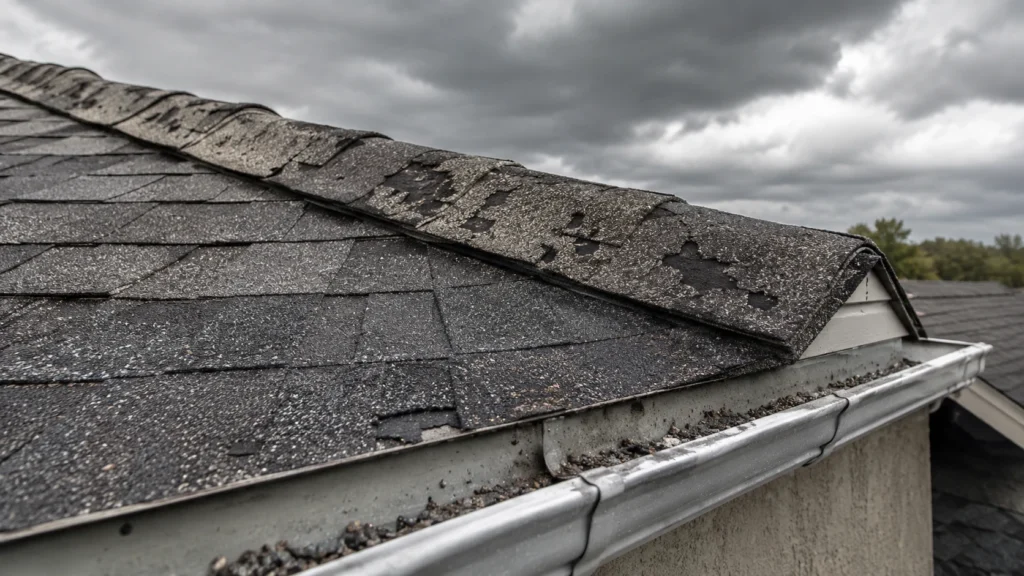
The signs of hail damage on asphalt shingles can be easy to miss, especially when the roof still looks “fine” from the driveway. That is what makes hail damage frustrating. A storm passes through, the rain stops, the sun comes out, and everything seems normal. Then weeks later, granules start piling in the gutters. A ceiling stain appears. A roof inspection reveals bruised shingles, cracked mats, dented vents, and damaged flashing that were never visible from the ground.
That is the real problem. Hail damage is not always dramatic. It does not always leave huge holes in the roof. It does not always tear shingles away. Many times, hail quietly weakens the roofing system by knocking protective granules loose, bruising the asphalt mat, cracking older shingles, and damaging roof accessories around the shingles.
Forney homeowners often deal with strong storms that can leave roof damage behind, and asphalt shingles are especially vulnerable when hail is driven by wind. Even small hail can cause problems when conditions are right. Larger hail can create immediate damage. Older shingles may be more brittle. Newer shingles may hide impact damage better. Either way, the roof deserves a closer look after a severe storm. This guide breaks down what to look for, why those signs matter, and how property owners can document damage before small roof problems become larger repair issues.
Why Asphalt Shingles Are Vulnerable to Hail
Asphalt shingles are popular because they are affordable, available, and effective when properly installed. They are also layered products. That means every layer has a job.
A typical asphalt shingle includes:
| Shingle Layer | Main Purpose |
| Fiberglass mat | Provides structure and strength |
| Asphalt coating | Helps waterproof the shingle |
| Granules | Protect against sun exposure and weather |
| Sealant strip | Helps shingles bond together |
| Backing material | Supports handling and installation |
Hail can damage one layer or several layers at the same time. The most visible damage usually happens to the granules. These small mineral particles protect the asphalt from sunlight, heat, rain, and general weather exposure. When hail strikes the shingle, it can knock granules loose and expose the darker asphalt underneath.
That is only the surface issue. The deeper problem is impact force. A hailstone can strike the shingle hard enough to bruise the asphalt layer or fracture the mat below. When that happens, the shingle may still look intact, but its ability to shed water and resist future weather may be reduced. That is why roof hail damage should not be judged only from the sidewalk. A roof can look normal from the ground and still have scattered impact marks across multiple slopes. It can also have damaged vents, gutters, flashing, and ridge caps that tell a clearer story about the storm.
What Hail Damage Usually Looks Like on Asphalt Shingles
The signs of hail damage on asphalt shingles vary from roof to roof. Storm intensity matters. So does shingle age, roof pitch, hail size, wind speed, and the direction of the storm. Some roofs show obvious marks. Others show subtle damage that requires a trained eye.
Common signs include:
- Dark spots where granules are missing
- Soft bruised areas on shingles
- Circular or irregular impact marks
- Cracked shingles
- Dented roof vents
- Dented gutters or downspouts
- Granules collecting in gutters
- Damaged ridge caps
- Interior water stains after rain
One of the most important things to understand is pattern. Hail damage is usually random. It does not follow neat rows. It does not appear evenly across the entire roof. It often shows up more heavily on storm-facing slopes, roof edges, ridges, and exposed roof accessories. Aging looks different. Normal wear is often more uniform. Foot traffic may appear in predictable pathways. Installation issues may follow rows or sections. Hail damage usually looks scattered because hailstones strike wherever the storm carries them. That distinction matters during insurance inspections and claim reviews.
Dark Spots or Impact Marks on Shingles
One of the most common signs of hail damage is a dark spot on the shingle surface. These marks often appear where hail has knocked away the protective granule layer. The exposed asphalt underneath may look black, gray, or darker than the surrounding shingle surface. Sometimes the mark is round. Sometimes it is irregular. Sometimes it looks like a small scuff or patch.
Do not expect every hail mark to look identical. Hailstones vary in size and shape. Some are round. Some are jagged. Some are soft and slushy. Others are hard enough to dent metal. Wind can also change the angle of impact, causing marks that look stretched, angled, or uneven. A few dark spots may not tell the whole story. However, multiple scattered dark impact marks across several roof slopes should be documented.
Look especially at:
- Slopes facing the storm direction
- Ridge caps
- Valleys
- Areas near vents and roof penetrations
- Shingles around metal accessories
- Lower roof sections where water runoff collects granules
The key is not just the mark itself. It is the pattern, location, and quantity of marks.
Granule Loss After a Hailstorm
Granule loss is one of the strongest visual clues after a hailstorm. Asphalt shingle granules act like armor. They shield the asphalt coating from ultraviolet exposure and help the roof withstand weather over time. When hail knocks those granules loose, the shingle loses some of that protection.
You may notice granules in several places after a storm:
- Inside gutters
- At the bottom of downspouts
- On splash blocks
- Along the driveway
- Around the foundation
- On patios or walkways
- Near landscape beds below roof edges
A small amount of granule loss is normal as shingles age. That is important. Older roofs naturally shed granules over time. But sudden heavy granule loss after a hailstorm is different. If gutters were clean before the storm and are now filled with shingle granules, that deserves attention. If dark spots appear across the roof at the same time, that adds more concern. If metal vents and gutters also show dents, the storm evidence becomes stronger.
Granule loss is not just cosmetic. Once the asphalt layer is exposed, sunlight can accelerate deterioration. Over time, the exposed area can dry out, crack, and weaken. That is why missing granules should be taken seriously.
Bruised or Soft Spots on Shingles
Some hail damage cannot be fully judged by sight alone. A shingle may look only slightly marked, but when inspected closely, the impact point may feel soft. Roof inspectors often describe this as bruising. It is similar to pressing on a bruised apple. The surface may still be there, but the structure underneath has been damaged. Bruising can indicate that the hail impact affected the mat beneath the granules. This matters because the mat gives the shingle strength. Once that layer is compromised, the shingle may not perform as intended. It may become more vulnerable to cracking, moisture intrusion, and future wind damage.
Property owners should be careful here. Do not climb onto a roof just to press shingles. Roof surfaces can be steep, slick, unstable, and dangerous. Walking on damaged shingles can also make the damage worse. Ground-level observation is useful, but close inspection should be handled safely by someone with the right equipment and experience. Still, it helps to understand what bruising means. A roof can have real hail damage even when the damage does not look severe in photos. Texture, softness, and mat condition often matter as much as color.
Cracked Asphalt Shingles
Cracking is another serious sign. Large hail can crack shingles on impact. Wind-driven hail can be even more damaging because the strike is not just vertical. It hits at an angle with force. Older shingles are especially vulnerable because they may already be dry, brittle, or weakened by years of heat exposure.
Cracks may appear as:
- Thin lines across the shingle surface
- Star-like cracks near impact points
- Splits along shingle edges
- Fractures near corners
- Breaks through raised or unsupported areas
Cracked shingles create openings for water. At first, the leak may not appear inside the home. Water may enter slowly. It may soak underlayment. It may travel along decking or framing before it shows up as a ceiling stain. By the time the stain appears, the roof problem may have been developing for weeks or months.
That is why the absence of a leak does not prove the roof is undamaged. A damaged roof can still shed water for a while. Then another storm hits. Then heat expands the material. Then a crack widens. Eventually, water finds a path. Small cracks can become expensive problems.
Missing or Displaced Granules in Random Patterns
Pattern matters in roof inspections. The signs of hail damage on asphalt shingles usually appear in a random pattern. Hailstones do not land in perfect rows. They strike unevenly across slopes, ridges, vents, valleys, and exposed roof surfaces. This helps separate hail damage from other conditions.
Here is a useful comparison:
| Condition | Common Appearance | Likely Cause |
| Random dark impact marks | Scattered spots across shingles | Hail impact |
| Even granule loss | Consistent wear across roof | Aging |
| Repeating defects | Similar marks in rows or batches | Manufacturing or installation issue |
| Linear scuffing | Marks in walking paths | Foot traffic |
| Missing shingles | Exposed roof areas | Wind or fastening issue |
| Dented metals | Round or irregular indentations | Hail impact |
This does not mean every inspection is simple. It rarely is. A roof can have both aging and hail damage. It can have old repairs and new storm damage. It can have wind damage on one slope and hail damage on another. That is why documentation matters. A strong inspection looks at the full picture. The shingles matter. So do the metals, gutters, vents, interior conditions, weather history, and timing.
Damage to Ridge Caps and Roof Edges
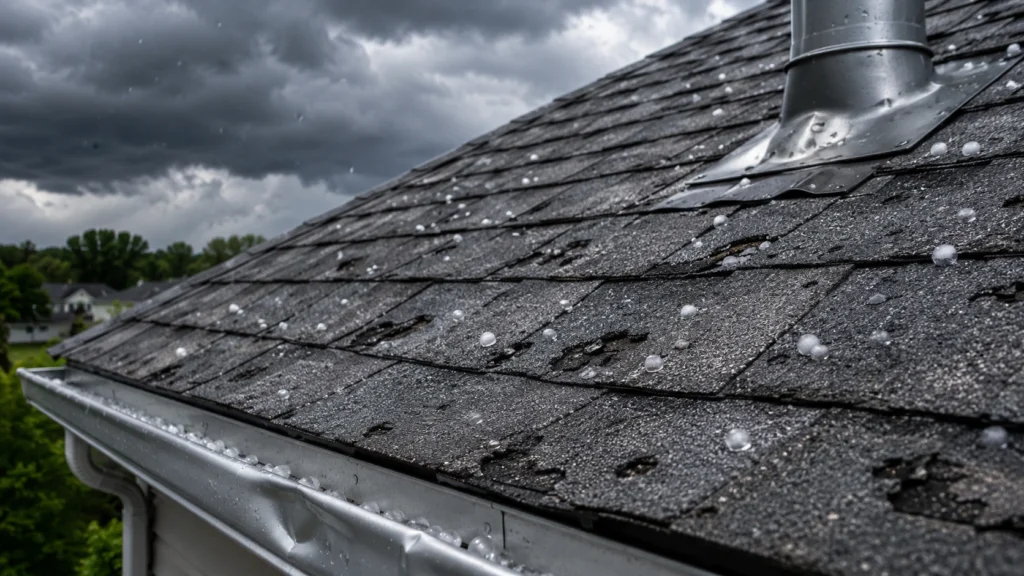
Ridge caps often reveal storm damage clearly. They sit at the peaks of the roof, which means they are exposed to hail from multiple angles. They also tend to take direct impact because there is less surrounding surface to shield them. When hail hits ridge caps, it may knock away granules, dent the cap, crack the shingle, or expose asphalt along the raised edge.
Look for:
- Missing granules along the ridge
- Cracked ridge shingles
- Dark exposed asphalt on raised areas
- Dents or soft spots along the peak
- Loose or lifted ridge caps
Roof edges can also show concentrated damage. Edges catch wind. They may receive stronger impact when hail is driven sideways during severe storms. Valleys can collect granules and debris, making them useful areas to inspect after the storm. Properties in Forney may experience hail, wind, and heavy rain during strong storm systems, which means roof damage may involve more than one part of the roofing system. The shingles may show impact damage, while gutters show dents and attic areas show moisture. That combination matters. It tells a bigger story than one mark on one shingle.
Damage Around Roof Vents, Flashing, and Soft Metals
Metal components often make hail easier to identify. Why? Because hail dents metal. Asphalt shingles can hide impact damage, especially when the marks are subtle. Metal surfaces are less forgiving. They often show visible dents, dings, and impact patterns after a hailstorm. Inspect visible metal areas from the ground where possible.
Common hail-damaged components include:
- Roof vents
- Turbine vents
- Box vents
- Exhaust caps
- Flashing
- Drip edge
- Gutters
- Downspouts
- Metal valley flashing
- HVAC fins
- Chimney caps
- Window screens
Soft metal damage does not automatically prove every shingle is damaged. But it is important supporting evidence. If gutters, vents, and flashing show fresh dents, the roof should be inspected closely. These components can help establish storm intensity and direction. They may also be included in an insurance estimate when properly documented.
Too often, roof estimates focus only on shingles and overlook related components. That can leave property owners with incomplete repairs. A roof is a system. The estimate should reflect that.
Hail Damage vs. Normal Wear and Tear
This is where many disputes begin. Insurance companies may argue that observed roof conditions are caused by age, wear, heat, poor installation, or prior damage rather than hail. Sometimes that is correct. Sometimes it is not. The challenge is separating old deterioration from recent storm damage.
Normal wear often includes:
- Gradual granule loss
- Fading across large roof areas
- Curling shingles
- Dry or brittle surfaces
- Minor cracking from age
- Exposed asphalt on older shingles
- General thinning over time
Hail damage often includes:
- Random impact marks
- Fresh granule displacement
- Bruised shingle mats
- Dents on soft metals
- Damage concentrated on storm-facing slopes
- Cracked shingles near impact points
- Sudden granule buildup in gutters after a storm
The difference is not always obvious from photos alone. A proper evaluation considers timing. What did the roof look like before the storm? When did the granules appear? Are there matching dents on vents and gutters? Did neighbors report damage? Was there a known hail event in the area? That is why evidence matters. In claim situations, good evidence reduces guesswork.
Hail Damage vs. Blistering
Blistering is often confused with hail damage. Blisters are small raised or broken areas that may form because of trapped moisture, heat, manufacturing conditions, or aging. Once a blister opens, it can leave a pockmark that resembles hail damage. At a glance, the two can look similar. But there are differences. Blistering often appears more randomly across shingles but may not have the same impact pattern as hail. It may expose asphalt without a clear force mark. It may be more common on older roofs or roofs with ventilation issues. Hail, on the other hand, often appears alongside other storm indicators such as dented vents, damaged gutters, and granule displacement around impact points.
This is where the idea of epistemology becomes oddly useful. It is the study of knowledge and how people justify what they believe. In roof inspections, the question is similar: how do we know this mark came from hail and not age, heat, or another cause? The answer should come from evidence. Not assumptions. Not a quick glance. Evidence includes pattern, texture, timing, metal damage, storm reports, interior symptoms, and close inspection.
Interior Warning Signs After Hail Damage
Roof damage does not always announce itself immediately. Sometimes the first visible warning sign appears inside the property. That can happen days, weeks, or even months after the storm. Water may enter slowly, travel along framing, soak insulation, and finally stain a ceiling or wall.
Interior warning signs include:
- Brown or yellow ceiling stains
- Damp attic insulation
- Water marks around vents
- Stains near chimneys or skylights
- Peeling paint
- Bubbling drywall
- Musty odors
- Dripping during heavy rain
- Dark spots on attic decking
These signs should not be ignored. A small stain may point to a larger roof issue above. It may also indicate damaged flashing, compromised underlayment, cracked shingles, or failed seals around penetrations.
If you notice interior damage after a hailstorm, document it immediately. Take photos from different angles. Record the date. If water is actively entering, take reasonable steps to prevent further damage, such as placing a bucket, moving belongings, or arranging temporary protection. Then keep receipts. Mitigation expenses may become relevant during the claim process, depending on the policy and circumstances.
Why Hail Damage Can Be Missed During a Quick Inspection
A rushed inspection can miss real damage. That is not always intentional. Roofs are complicated. Some damage is subtle. Some shingles hide impact points. Some slopes are difficult to access. Some roofs are steep, high, or unsafe to walk. Photos may not capture bruising. Lighting can make damage harder to see. Still, missed damage can create major problems for property owners.
Common reasons hail damage gets overlooked include:
- The roof is inspected only from the ground
- The inspection focuses only on obvious missing shingles
- Soft metals are not checked
- Ridge caps are skipped
- Interior areas are not reviewed
- Damage is dismissed as age without enough evidence
- The storm-facing slopes are not evaluated carefully
- The roof has multiple layers of old and new damage
A complete inspection takes time. It should look at more than shingles. It should consider roof accessories, gutters, vents, flashing, attic conditions, interior staining, and storm direction. That full-picture approach is especially important when insurance money is involved because an incomplete estimate can lead to incomplete repairs.
Immediate Steps After a Hailstorm
The section title matters because many property owners search for exactly this: Immediate Steps After a Hailstorm. Here is the practical version. Start safely. Do not climb onto a wet, steep, or damaged roof. No photo is worth a fall. Then document what you can from the ground.
Take photos of:
- Roof slopes from several angles
- Gutters and downspouts
- Granules near drainage areas
- Dented metal surfaces
- Damaged fencing
- Window screens
- Outdoor furniture
- Siding
- Interior stains
- Attic moisture, if safe to access
Write down the storm date. Save screenshots of weather alerts if you have them. Keep repair receipts. If temporary repairs are needed, document the damage before and after the temporary work. Call for a professional roof inspection if you suspect damage.
Do not wait until water enters the home. Waiting can make the damage worse and may complicate the timeline. Prompt documentation helps show what happened and when it happened. Simple steps can make a major difference later.
What Not to Do After Suspected Hail Damage
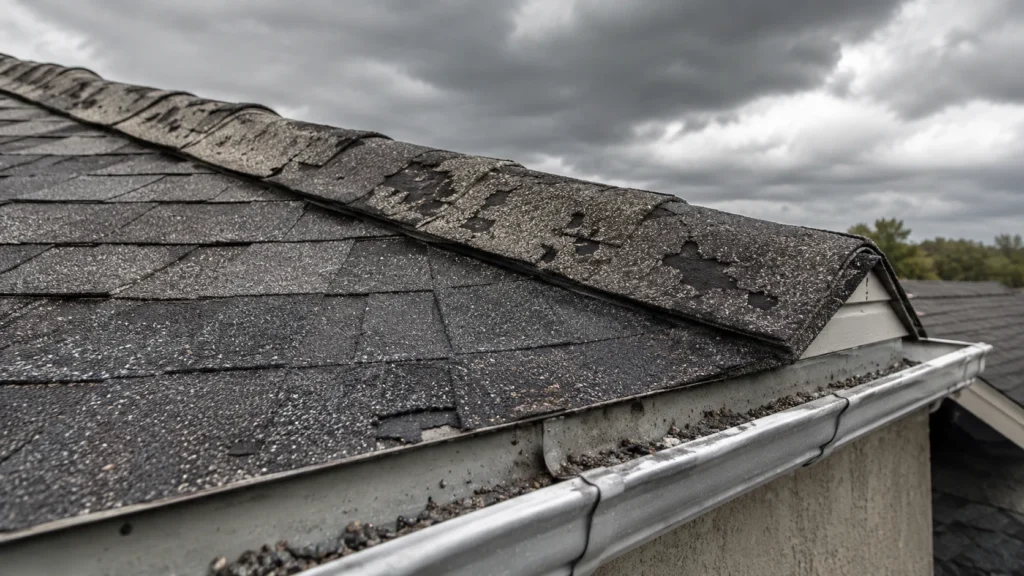
Good decisions help. Bad decisions can hurt. After a hailstorm, avoid these common mistakes:
| Mistake | Why It Can Cause Problems |
| Climbing on the roof without safety equipment | You can get hurt or cause more damage |
| Waiting too long to inspect | Damage may worsen or become harder to connect to the storm |
| Throwing away damaged materials | You may lose useful evidence |
| Making permanent repairs too quickly | Damage may not be fully documented first |
| Assuming no leak means no damage | Hail damage can exist before leaks appear |
| Accepting a rushed inspection as final | Some damage requires closer review |
| Ignoring gutters and soft metals | These areas often show clear hail impact |
The biggest mistake is assuming the roof is fine because it is not leaking today. Roofs often fail gradually. A bruised shingle may not leak during the first rain. A cracked area may widen after heat exposure. Missing granules may accelerate aging over time. Damaged flashing may allow water entry during a future storm. Small signs matter.
How Hail Damage Affects Insurance Claims
The signs of hail damage on asphalt shingles often become important during an insurance claim. After a claim is filed, the insurance company may inspect the property and determine whether damage is covered under the policy. The adjuster may prepare an estimate for covered storm damage. That estimate may include roof shingles, ridge caps, flashing, vents, gutters, interior water damage, or other affected components. But claims do not always go smoothly.
Disputes can happen over:
- Whether the damage was caused by hail
- Whether damage is old or new
- Whether repair or replacement is required
- Whether all roof slopes are affected
- Whether matching issues exist
- Whether soft metals should be included
- Whether interior damage is related
- Whether pricing reflects current local costs
Coverage depends on the policy, damage facts, inspection findings, and claim documentation. No article can guarantee an outcome. But property owners can improve their position by documenting damage clearly and keeping organized records. That is the part you can control.
Why Documentation Matters for Asphalt Shingle Hail Claims
Documentation turns a claim from “I think the roof was damaged” into a clearer record of what happened. That matters.
A strong documentation file may include:
- Date of the storm
- Photos of shingles
- Photos of metal dents
- Photos of granules in gutters
- Videos showing roof conditions
- Interior damage photos
- Contractor inspection reports
- Repair estimates
- Weather information
- Claim correspondence
- Receipts for temporary repairs
Organize everything by date. This sounds basic, but it helps. When a claim becomes confusing, a simple timeline can cut through the noise. It shows when the storm happened, when damage was discovered, when inspections occurred, and when repairs or temporary mitigation took place.
Photos should be clear. Take wide shots and close-ups. Wide shots show location. Close-ups show detail. If possible, include photos from multiple sides of the property. Do not rely on memory. Storm claims can stretch over weeks or months. Details fade. Written records help.
Common Areas Insurance Estimates May Miss
Roof claims sometimes miss related damage. That can happen when the inspection focuses too narrowly on the main roof covering. Asphalt shingles are important, but they are not the only part of the roofing system.
Commonly missed items include:
- Ridge caps
- Starter shingles
- Drip edge
- Step flashing
- Counter flashing
- Pipe boots
- Roof vents
- Valley metal
- Gutters
- Downspouts
- Window screens
- Siding
- Fencing
- HVAC fins
- Interior water damage
- Code-required items
This is where a detailed review can matter. A repair estimate that replaces shingles but ignores damaged vents may leave the roof incomplete. An estimate that includes roof covering but misses interior staining may fail to reflect the full loss. An estimate that does not account for current labor or material pricing may fall short of actual repair costs.
Property owners do not need to become roofing experts. But they should ask questions. What components were inspected? Which slopes were damaged? Were metals included? Were ridge caps checked? Was the attic inspected? Were interior stains documented? Does the estimate include all necessary materials? Those questions are fair.
When a Public Adjuster May Be Helpful
Some hail claims are straightforward. Others are not. A public adjuster may be helpful when the damage is disputed, the estimate seems too low, the claim is delayed, or the inspection appears incomplete. Public adjusters work for the policyholder, not the insurance company. Their role may include reviewing damage, documenting the claim, preparing estimates, communicating with the insurer, and helping present the loss.
Situations that may require extra support include:
- The claim was denied
- The roof damage was blamed on age
- The estimate excludes obvious damaged components
- Interior leaks were not included
- The settlement seems too low
- The insurer inspected only part of the property
- Multiple trades are involved
- The damage is difficult to see from the ground
- There is disagreement over repair versus replacement
A public adjuster cannot change the policy. They cannot guarantee coverage. But they can help organize evidence and identify damage that may have been missed. That can be valuable when the claim becomes more technical.
How Professional Roof Inspections Identify Hail Damage
A good roof inspection is methodical. It does not rely on one photo or one mark. It reviews the roof slope by slope and looks for patterns. It compares shingles with soft metals. It checks vulnerable areas. It considers storm direction. It may include attic and interior review when leaks are suspected.
A detailed inspection may include:
- Slope-by-slope roof evaluation
- Close-up shingle inspection
- Ridge cap review
- Soft metal inspection
- Gutter and downspout review
- Photo documentation
- Attic inspection
- Interior moisture review
- Storm direction analysis
- Review of prior repairs
- Estimate comparison
Some inspectors may use test squares, which are marked roof areas used to document the number of hail impacts within a defined space. This can help show damage density on specific slopes. The goal is not to exaggerate damage. The goal is accuracy. If the roof is damaged, the documentation should show it clearly. If some conditions are unrelated to hail, that should also be recognized. Honest documentation is stronger than inflated claims.
Can Hail-Damaged Shingles Be Repaired?
Sometimes, yes. Sometimes, no. The right repair depends on the extent of damage, the age of the roof, the type of shingles, the condition of surrounding materials, and whether replacement shingles can reasonably match. A few damaged shingles may be repairable. Widespread hail impact across multiple slopes may require more significant work.
Factors that affect repair options include:
- Number of damaged shingles
- Location of damage
- Roof age
- Shingle brittleness
- Availability of matching shingles
- Damage to underlayment
- Damage to flashing or vents
- Local building requirements
- Manufacturer installation guidelines
Older shingles may break during repair attempts. Matching may also become an issue if the existing shingles are faded, discontinued, or weathered. That does not automatically mean the roof must be replaced. But it does mean repairs should be evaluated carefully. A cheap patch can become expensive if it fails.
How Long After a Hailstorm Should You Inspect the Roof?
Soon. That is the practical answer. The longer damage goes unchecked, the harder it may become to document cleanly. Granules can wash away. Temporary repairs may alter the evidence. Additional storms may complicate the timeline. Heat can worsen cracks. Water can enter slowly and create interior damage.
Prompt inspections help connect damage to the storm event. They also help property owners make informed decisions. If the roof is fine, great. If it is damaged, early documentation gives you a clearer path forward. Many insurance policies include notice requirements. The exact timing depends on the policy, so property owners should review their documents and act promptly. Do not assume you have unlimited time. If there was a severe hailstorm and you see dents, granules, dark shingle marks, or interior stains, get the roof checked.
Practical Checklist: Signs of Hail Damage on Asphalt Shingles
Use this checklist after a storm. Again, stay safe. Most of these can be observed from the ground or documented by a professional during a roof inspection.
| Area to Check | What to Look For |
| Shingles | Dark impact marks, missing granules, cracks |
| Ridge caps | Exposed asphalt, bruising, fractured caps |
| Gutters | Dents, loose granules, impact marks |
| Downspouts | Granule discharge, dents |
| Roof vents | Round dents, cracked caps, damaged seams |
| Flashing | Dings, bends, lifted edges |
| Attic | Damp insulation, dark decking, musty smells |
| Ceilings | Stains, bubbling paint, water marks |
| Exterior metals | Dents on HVAC fins, screens, trim |
| Yard areas | Shingle granules near drainage paths |
The signs of hail damage on asphalt shingles are easier to handle when you document them early. Take photos. Save dates. Keep receipts. Get professional help when damage is unclear.
Why Small Hail Marks Can Become Bigger Problems
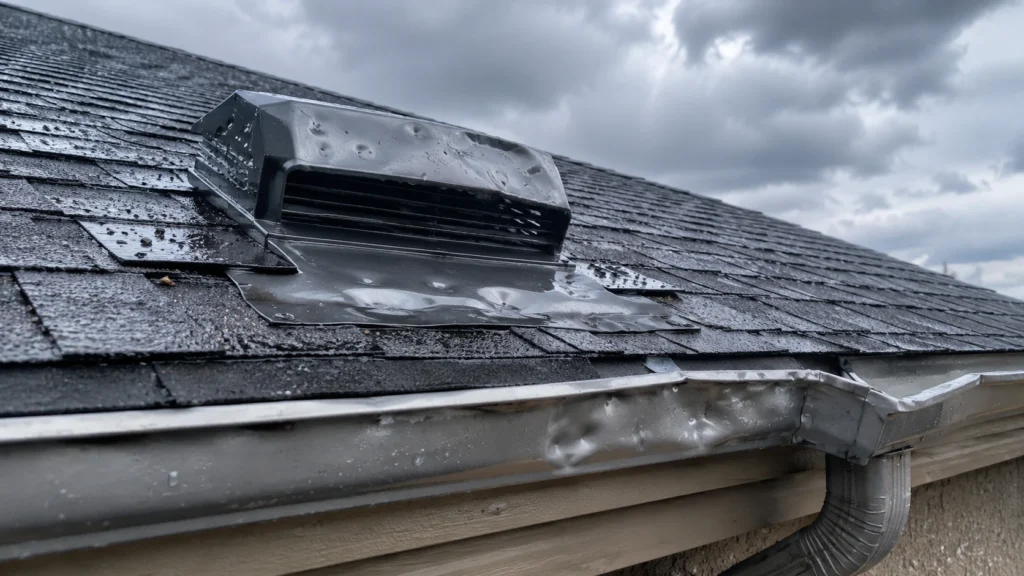
Small does not always mean harmless. A tiny impact mark may expose asphalt. That exposed spot may dry under the sun. The shingle may age faster in that area. A small crack may spread. A bruised mat may weaken. Water may begin to find its way beneath the surface.
That is why roof damage should be viewed over time. Hail damage can reduce the useful life of a roof even when the roof does not fail immediately. This is especially true when a storm affects many shingles across the same slope. The roof may continue working for a while, but its protective capacity may be reduced. Think of it this way. A windshield chip may not block your view today. But another bump, temperature change, or stress point can cause it to spread. Roof shingles can behave similarly after impact damage. The risk is not always immediate collapse. The risk is accelerated deterioration.
Local Storm Conditions and Roof Damage
Storm damage is local. One neighborhood may receive large hail while another nearby area receives only heavy rain. One side of a property may take the strongest impact while another side shows little damage. Wind direction, roof slope, tree coverage, and surrounding structures all affect the outcome.
That is why roof inspections should be property-specific. A neighbor’s roof damage may be useful context, but it does not prove your roof is damaged. At the same time, a neighbor’s lack of damage does not prove your roof is fine. Every roof must be evaluated on its own conditions. Forney property owners should take roof damage seriously after a hailstorm because small roofing issues can grow quietly before they become visible inside the home. Storm evidence should be gathered early. That includes photos, inspection notes, weather information, and repair documentation.
Final Thoughts
The signs of hail damage on asphalt shingles can be subtle, but they should never be ignored. Dark impact marks, missing granules, bruised shingles, cracked surfaces, dented vents, damaged gutters, and interior water stains can all point to storm-related roof damage.
Some signs are easy to see. Others require a closer inspection. The most important step is to act early. Document what you can. Avoid unsafe roof access. Watch for granules around gutters and downspouts. Check interior ceilings and attic areas when safe. Pay attention to dents on soft metals. If something looks off, schedule a professional inspection before the next storm makes the problem worse.
Hail damage is not just about how the roof looks today. It is about how well the roof will protect the property tomorrow. The signs of hail damage on asphalt shingles are worth learning because they help property owners make better decisions, ask better questions, and protect their homes with stronger documentation. When a claim becomes complicated, when damage is disputed, or when the estimate seems incomplete, additional support may be necessary. The goal is simple: understand the damage, document it clearly, and make sure the full roofing system is properly evaluated.
FAQs
The most common signs include dark impact marks, missing granules, bruised shingles, cracks, and dents on nearby metal roof components.
Yes. Hail can weaken shingles, loosen granules, or bruise the mat before any visible leak appears inside the property.
Granule loss may mean hail has knocked away the protective surface of the shingles, exposing the asphalt layer underneath.
Not always. Dark spots may come from hail, aging, blistering, or wear, so the full roof pattern should be inspected.
No. Roof inspections can be dangerous, especially after a storm, so it is safer to document what you can from the ground.
A roof should be inspected as soon as possible after a hailstorm to document damage before weather or repairs alter the evidence.
Yes. Dented gutters and large amounts of loose granules inside downspouts can support evidence of storm impact.
Hail damage often appears as random impact marks, while aging usually causes more uniform granule loss, fading, or brittleness.
Yes. Wind-driven hail may damage one or two slopes more heavily, depending on storm direction and roof exposure.
You may consider contacting a public adjuster if the claim is denied, the estimate seems too low, or the damage inspection appears incomplete.