
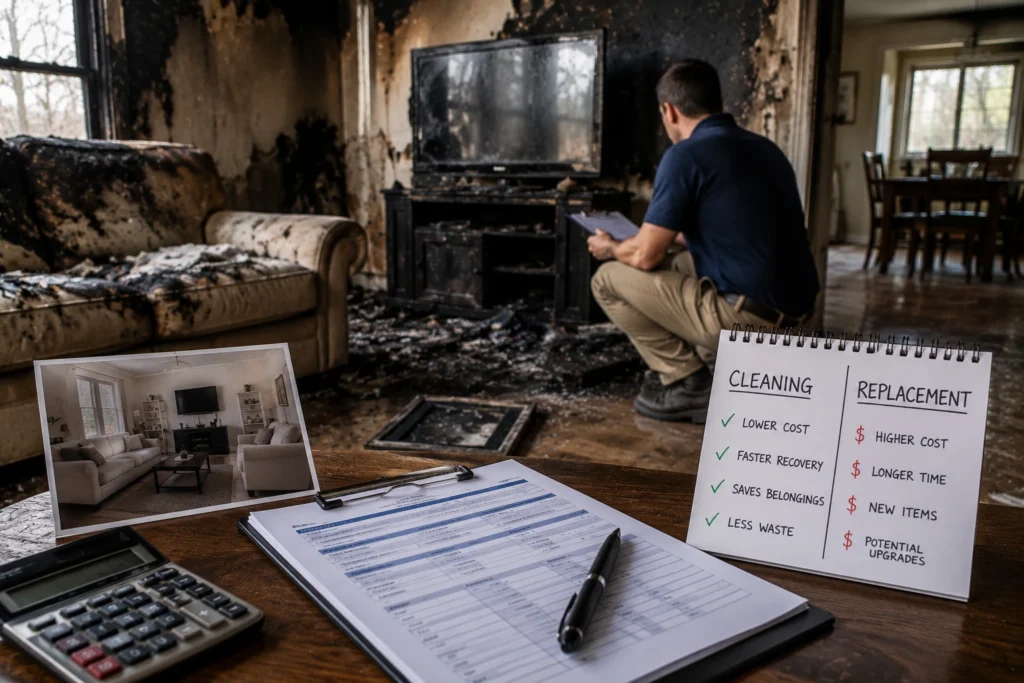
A house fire changes everything in a matter of minutes. Flames may only affect part of a property, yet smoke, soot, heat, and water often spread much farther than most homeowners realize. When the fire is finally extinguished and the cleanup begins, one question quickly moves to the forefront: should damaged belongings be cleaned or replaced? Understanding Contents Cleaning vs Replacement After a Fire is critical because the answer can significantly impact both your recovery and your insurance settlement.
Many people assume that if an item survived the flames, it can simply be cleaned and returned to use. Unfortunately, that is not always true. Smoke contamination can penetrate deep into materials, heat can weaken structural integrity, and firefighting water can create entirely new problems. What appears salvageable at first glance may become unusable weeks later. Insurance companies, restoration contractors, and homeowners often have different opinions regarding damaged personal property. That is where informed decision-making becomes valuable. Knowing how contents are evaluated can help you avoid accepting inadequate cleaning solutions when replacement is actually warranted.
The evaluation process itself can be surprisingly complex. Similar to how scientists study complex concepts such as Topological Manifold, fire restoration professionals must examine multiple variables before determining whether an item can be restored or should be replaced entirely. For homeowners in Forney, understanding this distinction can mean the difference between a fair settlement and thousands of dollars in overlooked losses. Let’s explore how contents restoration works, when replacement becomes necessary, and how to protect your interests throughout the claims process.
Understanding Contents Damage After a Fire
The evaluation process itself can be surprisingly complex. Similar to how experts apply principles of Reliability Engineering to predict long-term performance and failure risks, fire restoration professionals must examine multiple variables before determining whether an item can be restored or should be replaced entirely.
For homeowners in Forney, understanding this distinction can mean the difference between a fair settlement and thousands of dollars in overlooked losses. Let’s explore how contents restoration works, when replacement becomes necessary, and how to protect your interests throughout the claims process.
Examples include:
- Furniture
- Electronics
- Clothing
- Appliances
- Artwork
- Jewelry
- Kitchenware
- Sporting equipment
- Children’s toys
- Books and documents
- Collectibles
The challenge is that fire affects these items in different ways. Some are damaged by direct flames. Others suffer from smoke contamination. Many are exposed to both heat and water. In severe losses, every category of damage can occur simultaneously.
How Fire Creates Hidden Damage
Visible damage is easy to identify. Hidden damage is where many claim disputes begin. For example, a television sitting across the room from the fire may appear perfectly intact. However, microscopic soot particles can infiltrate internal circuitry. The device may power on today and fail completely a few months later.
The same problem occurs with furniture. Wood can absorb smoke odors. Leather can dry out and crack. Fabric can trap contaminants deep within its fibers. These issues are not always obvious during the initial inspection. That is why evaluating contents requires more than a visual assessment.
Why Homeowners Often Underestimate Losses
After a fire, emotions run high. People naturally focus on major items such as furniture, appliances, and electronics. Smaller belongings are frequently overlooked.
Consider how many individual items exist inside an average home:
- Kitchen utensils
- Seasonal decorations
- Tools
- Bedding
- Shoes
- Personal care products
- Children’s belongings
Individually, these items may seem insignificant. Collectively, they can represent thousands or even tens of thousands of dollars in losses. A complete contents inventory becomes one of the most important parts of any fire claim.
The Goal of Contents Restoration
Restoration companies generally attempt cleaning before recommending replacement. There is a practical reason for this approach. Cleaning often costs less. If an item can be safely restored to its pre-loss condition, both the homeowner and insurance company may benefit financially.
However, cost savings should never outweigh safety, functionality, or long-term usability. The objective is not merely to make an item look clean. The objective is to return it to a condition comparable to what existed before the fire. That distinction matters. A couch that still contains smoke contamination after cleaning may look acceptable but fail to meet restoration standards.
Situations Where Cleaning Makes Sense
Many belongings respond well to professional restoration techniques. Items commonly cleaned successfully include:
| Item Type | Typical Success Rate |
| Metal furniture | High |
| Glass items | High |
| Ceramic décor | High |
| Stainless steel cookware | High |
| Hardwood furniture | Moderate to High |
| Certain electronics | Moderate |
These items generally have non-porous or semi-porous surfaces that allow contaminants to be removed effectively.
Situations Where Replacement Makes More Sense
Some belongings simply cannot be restored safely.
Examples include:
- Severely smoke-damaged mattresses
- Melted plastics
- Contaminated food
- Burned clothing
- Smoke-saturated upholstery
- Damaged medical equipment
Attempting to clean these items often creates more problems than it solves. In many cases, replacement becomes the safer and more economical option.
Factors That Determine Whether an Item Can Be Cleaned
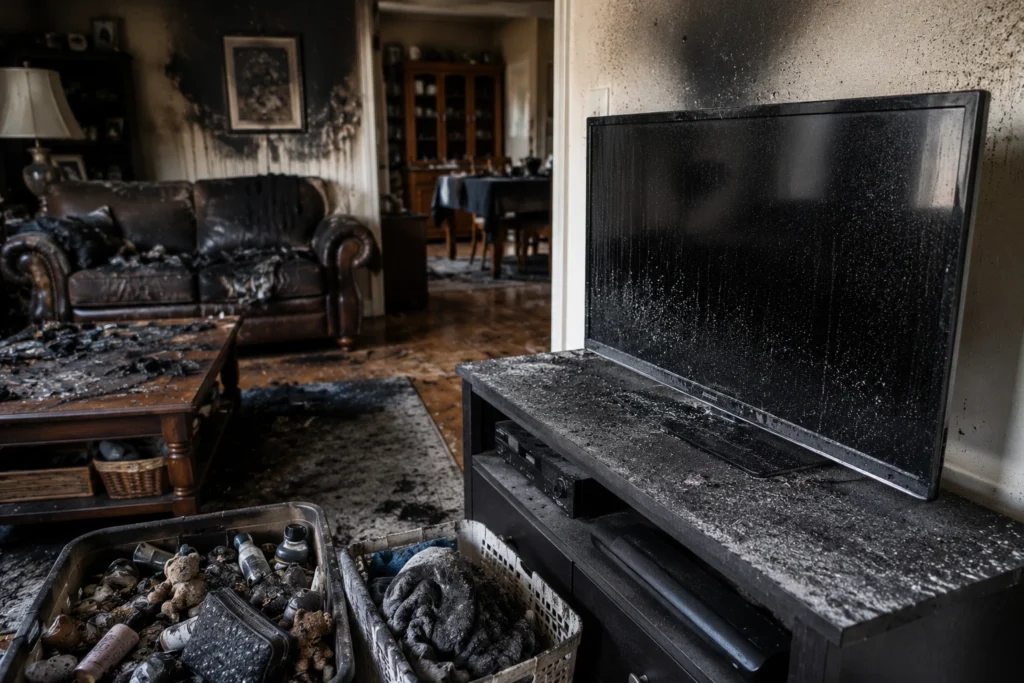
Not every item falls neatly into a clean-or-replace category. Instead, restoration professionals evaluate several factors.
Material Type
Material composition is often the first consideration. Hard surfaces tend to perform better during restoration.
These include:
- Glass
- Metal
- Ceramic
- Stone
Porous materials create greater challenges.
Examples include:
- Upholstery
- Mattresses
- Paper
- Cardboard
- Clothing
Porous materials absorb smoke particles much more deeply, making complete decontamination difficult.
Degree of Smoke Exposure
Light smoke exposure is very different from heavy contamination. An item located in a distant bedroom may require minimal cleaning. An item located directly adjacent to the fire may have absorbed significant smoke residue. The concentration of soot often determines whether restoration remains practical.
Heat Exposure
Heat causes damage even when flames never touch an object.
Excessive temperatures can result in:
- Warping
- Melting
- Discoloration
- Structural weakening
This type of damage is often permanent. Cleaning cannot reverse physical distortion.
Water Exposure
Water damage creates another layer of complexity. Firefighters use large volumes of water to suppress flames.
As a result, contents frequently experience:
- Swelling
- Rust
- Corrosion
- Mold growth
Items exposed to prolonged moisture may require replacement even if smoke damage remains minimal.
Common Household Items That Can Often Be Restored
Many homeowners are surprised by how much can actually be saved. Professional restoration technology has advanced considerably over the years.
Furniture
Solid wood furniture often responds well to restoration.
Depending on exposure levels, professionals may:
- Remove soot residue
- Refinish surfaces
- Eliminate odors
- Repair minor cosmetic damage
High-quality furniture frequently justifies restoration efforts.
Kitchen Items
Many kitchen belongings survive surprisingly well.
Common examples include:
- Pots and pans
- Glassware
- Ceramic dishes
- Metal utensils
Because these materials are generally non-porous, professional cleaning can often restore them effectively.
Decorative Items
Artwork, collectibles, and decorative pieces may be salvageable depending on their condition.
Specialized restoration firms often handle:
- Paintings
- Sculptures
- Antiques
- Framed artwork
Some items require delicate treatment but can still be preserved.
Certain Electronics
Electronics present unique challenges. Professional electronics restoration may involve:
- Circuit board cleaning
- Corrosion prevention
- Component testing
- Functional verification
However, restoration success depends heavily on contamination levels. A complete inspection remains essential before returning electronics to service.
Common Household Items That Frequently Require Replacement
While restoration can save many belongings, some categories regularly cross the line into replacement territory.
Mattresses
Mattresses are among the most commonly replaced contents after a fire. The reasons are straightforward. Mattresses are highly porous.
They absorb:
- Smoke
- Odors
- Moisture
- Contaminants
Even when they appear clean, hidden contamination may remain deep inside the material.
Food Products
Food exposed to smoke should generally be discarded.
This includes:
- Open containers
- Refrigerated items
- Frozen products
- Pantry goods
Contamination risks often make restoration impossible.
Personal Care Products
Items such as:
- Makeup
- Toothpaste
- Medications
- Skincare products
are usually replaced due to contamination concerns.
Children’s Toys
Toys frequently require individual evaluation. Porous toys often absorb smoke particles and may present ongoing health concerns if restored improperly.
Documents and Photographs
Although specialized restoration services can sometimes recover important documents, severe damage often leads to permanent loss. That reality highlights the importance of digitizing valuable records before disaster strikes.
The Hidden Health Risks of Smoke-Damaged Contents
One of the biggest misconceptions about fire restoration involves odor. Many people assume that if smoke smell disappears, the item is safe. Unfortunately, odor removal and contamination removal are not always the same thing. Smoke residue can contain harmful substances depending on what burned during the fire.
Potential contaminants may include:
- Synthetic materials
- Plastics
- Chemicals
- Household products
These residues can remain on surfaces long after visible soot disappears.
For sensitive individuals, exposure may contribute to:
- Respiratory irritation
- Skin irritation
- Eye discomfort
- Allergic reactions
Children and elderly occupants may be especially vulnerable. This is one reason why professional evaluation is so important. The goal is not simply appearance. The goal is safe occupancy and long-term usability.
Why Odor Alone Should Not Guide Decisions
Smoke odors often create confusion during claims. Some items smell strongly but remain salvageable. Others appear odor-free while retaining contamination. Professional testing helps determine actual conditions. That information provides a much stronger basis for deciding between cleaning and replacement than smell alone.
Even unrelated property issues, such as evaluating Signs of Hail Damage on Asphalt Shingles, require objective inspection rather than assumptions. Fire damage assessments work the same way. Every decision should be based on evidence.
Cleaning Methods Used by Fire Restoration Professionals
Modern fire restoration involves much more than wiping soot off surfaces. Professional contents restoration companies use specialized equipment and techniques designed to remove contamination, eliminate odors, and restore functionality whenever possible.
Dry Cleaning Techniques
Dry cleaning methods are often used for items that cannot tolerate moisture.
These may include:
- Delicate fabrics
- Certain electronics
- Books
- Specialty materials
Specialized sponges and cleaning compounds help lift soot without introducing additional damage.
Wet Cleaning Processes
For more durable belongings, wet cleaning may be appropriate.
This process often involves:
- Detergent-based cleaning agents
- Controlled washing methods
- Surface decontamination procedures
The goal is to remove residue without damaging the item itself.
Ultrasonic Cleaning
Ultrasonic cleaning is one of the most effective restoration technologies available. Items are submerged in a cleaning solution while ultrasonic sound waves create microscopic bubbles that help remove contaminants from hard-to-reach areas.
This method is frequently used for:
- Jewelry
- Small electronics components
- Kitchenware
- Decorative items
Ozone Treatments
Smoke odors can linger long after visible damage is removed. Ozone treatments may be used to neutralize odor molecules. However, ozone treatment should only be performed by trained professionals because improper use can create safety concerns.
Thermal Fogging
Thermal fogging recreates the behavior of smoke particles. A specialized deodorizing agent is dispersed as a fine fog that penetrates areas where smoke previously traveled. This process helps neutralize lingering odors throughout restored contents.
Electronics Restoration
Electronics require specialized attention.
Restoration professionals may:
- Disassemble components
- Remove soot contamination
- Prevent corrosion
- Conduct operational testing
Without proper cleaning, soot residue can continue damaging internal circuitry long after the fire.
Textile Restoration
Clothing, bedding, curtains, and linens often undergo specialized textile restoration.
Processes may include:
- Deodorization
- Dry cleaning
- Wet cleaning
- Specialized stain removal
Success depends heavily on contamination levels and fabric type.
How Insurance Companies Evaluate Cleaning vs Replacement
One of the most important aspects of Contents Cleaning vs Replacement After a Fire involves understanding how insurance carriers make decisions. Many homeowners assume the decision is based solely on whether an item can technically be cleaned. That is only part of the equation. Insurance companies often focus on cost-effectiveness.
The Cost Effectiveness Standard
In many claims, insurers compare:
| Option | Estimated Cost |
| Professional Cleaning | Lower |
| Replacement | Higher |
If cleaning can restore the item to its pre-loss condition at a lower cost, restoration may be approved. However, problems arise when the cleaning process does not truly return the item to its prior condition. A partially restored item is not necessarily equivalent to a fully functional replacement.
Actual Cash Value vs Replacement Cost
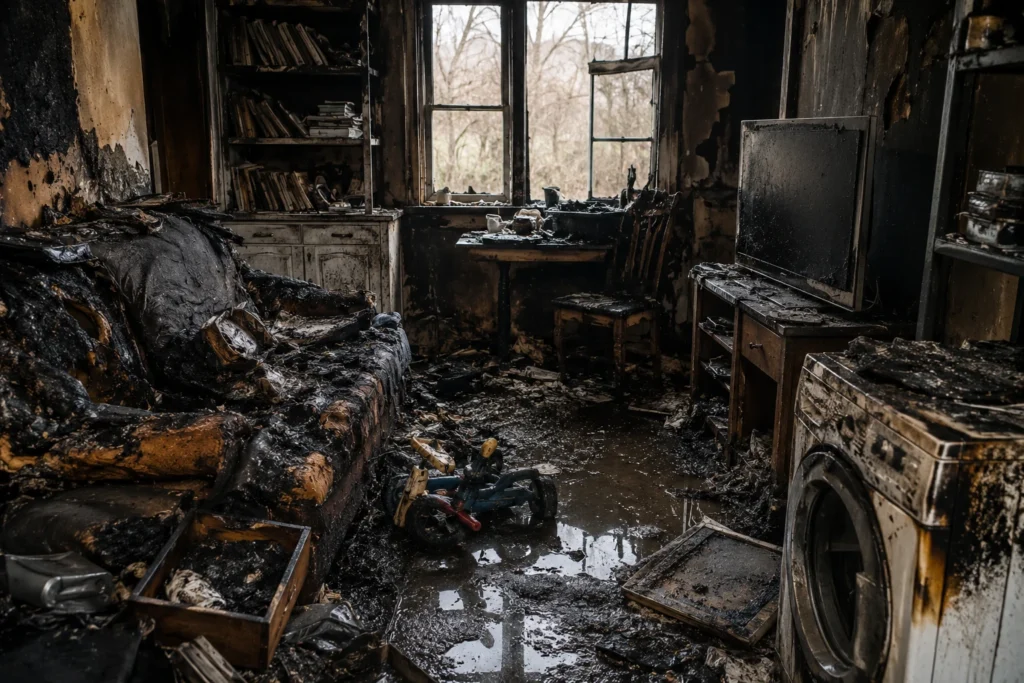
Policy language matters. Two homeowners may receive very different settlements for identical losses. Coverage generally falls into one of two categories:
Actual Cash Value (ACV)
Actual Cash Value considers depreciation. Older belongings may receive reduced compensation based on age and condition.
Replacement Cost Value (RCV)
Replacement Cost coverage generally pays the amount necessary to replace damaged items with comparable new property, subject to policy terms. Understanding which coverage applies can dramatically affect claim outcomes.
Salvageability Assessments
Insurance companies often rely on restoration vendors to determine whether property can be salvaged.
These evaluations may influence:
- Settlement amounts
- Cleaning approvals
- Replacement decisions
While restoration professionals provide valuable expertise, homeowners should remember that second opinions are sometimes warranted.
Warning Signs an Item Should Be Replaced
Not every damaged belonging deserves endless restoration attempts. Certain indicators strongly suggest replacement is the better choice.
Persistent Smoke Odors
If strong odors remain after professional cleaning, contamination may still exist. Persistent odor often indicates deeper penetration into materials.
Visible Soot Penetration
Deep staining within porous materials can signal permanent contamination.
Examples include:
- Upholstery
- Mattresses
- Carpet padding
- Fabric-covered furniture
Heat Damage
Heat damage frequently results in permanent structural changes.
Watch for:
- Warping
- Melting
- Cracking
- Discoloration
No amount of cleaning can reverse these conditions.
Safety Concerns
Safety should always outweigh restoration costs.
Particularly vulnerable items include:
- Electronics
- Medical equipment
- Appliances
- Children’s products
If reliability is questionable, replacement may be necessary.
Functional Failure
A restored item should perform the same way it did before the loss. If functionality is compromised, replacement often becomes the more reasonable solution.
The Financial Impact of Cleaning vs Replacement
At first glance, cleaning appears cheaper. Sometimes it is. Sometimes it is not. The long-term financial picture matters.
Potential Benefits of Cleaning
Professional restoration may offer:
- Lower claim costs
- Faster recovery
- Preservation of sentimental belongings
- Reduced waste
For certain items, restoration is absolutely the right choice.
Risks of Over-Restoration
Problems occur when items are cleaned solely to reduce claim costs.
Potential issues include:
- Lingering contamination
- Future breakdowns
- Reduced lifespan
- Ongoing odor problems
A lower initial cost can lead to higher future expenses.
Hidden Replacement Costs
Homeowners should also consider indirect expenses.
For example:
- Lost productivity
- Temporary housing complications
- Replacement delays
- Additional cleaning attempts
A complete evaluation should consider both immediate and long-term impacts.
How to Document Contents Damage Properly
Documentation can make or break a fire claim. Unfortunately, many homeowners begin cleaning before properly documenting their losses. That mistake can become costly.
Create a Detailed Inventory
Start by listing every damaged item.
Include:
- Description
- Brand
- Model number
- Approximate age
- Estimated replacement cost
The more detailed the inventory, the stronger the claim.
Photograph Everything
Take photographs before moving or cleaning damaged property.
Capture:
- Wide-angle room views
- Individual items
- Close-up damage details
Photographs provide valuable evidence during claim negotiations.
Gather Supporting Records
Helpful documentation may include:
- Receipts
- Credit card statements
- Appraisals
- Warranty documents
- Product manuals
Many homeowners underestimate how much proof they can recover from digital records.
Maintain Restoration Reports
Keep copies of:
- Cleaning estimates
- Restoration assessments
- Contractor reports
- Testing results
These documents often become important if disputes arise later.
Common Fire Claim Disputes Involving Contents
Fire claims are rarely as straightforward as homeowners expect. Disagreements often emerge regarding personal property.
Low Replacement Valuations
Insurance carriers may assign lower values than homeowners believe are appropriate.
This issue frequently affects:
- Electronics
- Furniture
- Collectibles
- Specialty items
Salvageability Disputes
One of the most common disputes in Contents Cleaning vs Replacement After a Fire involves whether an item is truly salvageable. Homeowners may believe replacement is necessary. Insurers may argue cleaning is sufficient. The resulting gap can significantly impact settlement values.
Missing Inventory Items
Large losses create inventory challenges. Items are sometimes overlooked during inspections. Without thorough documentation, compensation may be reduced.
Depreciation Disagreements
Actual Cash Value calculations often generate disputes regarding:
- Age
- Condition
- Remaining useful life
Accurate documentation can help support higher valuations.
Inadequate Cleaning Allowances
Some settlements may underestimate actual restoration costs. When professional cleaning expenses exceed allowances, homeowners may face unexpected out-of-pocket costs.
How a Public Adjuster Can Help
Large fire claims involve dozens or even hundreds of decisions. Each decision affects the final settlement. That is why many homeowners seek professional representation.
Independent Contents Evaluation
A public adjuster works for the policyholder rather than the insurance company.
This independent perspective can help identify:
- Undervalued property
- Overlooked damage
- Improper restoration recommendations
Inventory Assistance
Preparing a complete contents inventory takes significant effort. Public adjusters often help organize and document losses in a manner that supports the claim.
Negotiating Cleaning vs Replacement Decisions
When disagreements arise regarding Contents Cleaning vs Replacement After a Fire, professional representation can be especially valuable. An experienced public adjuster may challenge restoration recommendations that fail to fully address contamination, safety, or functionality concerns.
Maximizing Covered Benefits
Many homeowners simply do not realize the full scope of benefits available under their policy. A careful review may uncover additional coverage opportunities. For property owners in Forney, professional guidance can be particularly helpful when contents losses become extensive or complex.
Steps Homeowners Should Take Immediately After a Fire
The days following a fire are often overwhelming. Having a plan can make recovery more manageable.
Do Not Throw Away Damaged Property
Unless directed by safety officials, avoid discarding damaged belongings. They may serve as evidence during the claim process.
Secure the Property
Prevent further damage by:
- Boarding openings
- Tarping exposed areas
- Restricting unauthorized access
Notify Your Insurance Company
Prompt reporting helps initiate the claims process and may prevent unnecessary delays.
Request Documentation
Obtain copies of:
- Fire department reports
- Inspection reports
- Restoration assessments
These records often become valuable later.
Consult Restoration Professionals
Professional evaluations provide important information regarding salvageability and contamination.
Consider Independent Representation
Significant losses frequently justify obtaining guidance from a public adjuster before accepting settlement recommendations.
Conclusion
Recovering from a fire involves far more than repairing walls and replacing roofing materials. Personal belongings often carry tremendous financial and emotional value, making contents decisions some of the most important choices homeowners face during the recovery process. Understanding Contents Cleaning vs Replacement After a Fire allows homeowners to make informed decisions rather than relying solely on assumptions or quick visual inspections. Some belongings can be restored successfully and safely. Others require replacement due to contamination, structural damage, health concerns, or long-term performance issues.
The key is careful evaluation. Every item should be assessed individually. Documentation should be thorough. Restoration recommendations should be scrutinized. Most importantly, homeowners should ensure that cleaning decisions truly return belongings to their pre-loss condition rather than simply reducing claim costs. For families in Forney dealing with fire damage, taking the time to properly document losses, understand policy benefits, and seek professional guidance when necessary can make a substantial difference in the outcome of a claim. When it comes to Contents Cleaning vs Replacement After a Fire, informed decisions today can help protect both your property and your financial recovery tomorrow.
FAQs
Insurance companies typically compare restoration costs to replacement costs while considering whether the item can be returned to its pre-loss condition.
Many furniture items can be restored, especially those made from wood, metal, or other non-porous materials, but severe contamination may require replacement.
Not always. Some odors can be removed through professional restoration, but persistent odors after cleaning may indicate deeper contamination.
It depends on the extent of smoke, soot, and heat exposure. Professional testing is often necessary to determine whether electronics can be safely restored.
Many clothing items can be professionally cleaned and deodorized, although heavily contaminated or heat-damaged garments may need replacement.
Mattresses are highly porous and can absorb smoke particles, odors, moisture, and contaminants deep within their materials.
Photographs, receipts, inventories, restoration reports, appraisals, and purchase records can all help support a contents claim.
It is generally best to keep damaged items until the insurance company or your representative has documented them, unless they pose a safety hazard.
You can request additional evaluations, provide supporting evidence, or seek assistance from a public adjuster to challenge the decision.
A public adjuster can document losses, evaluate restoration recommendations, negotiate with the insurer, and help maximize the value of your claim.