
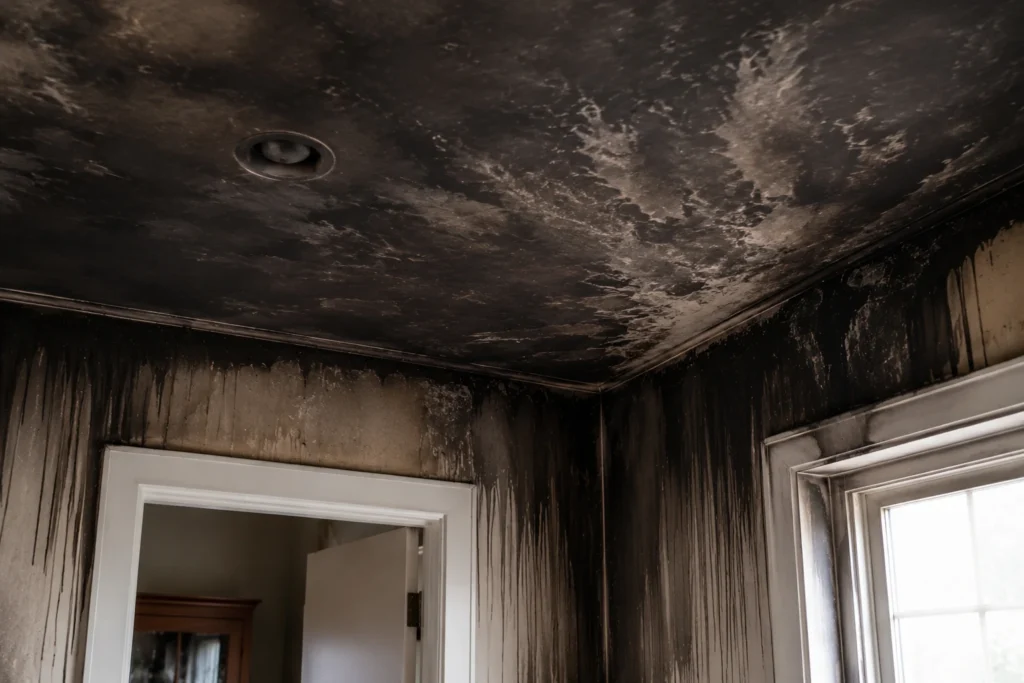
How Much Smoke Damage Is Needed for an Insurance Claim? It’s one of the most common questions homeowners ask after a fire. Many people assume smoke damage must be severe or visibly obvious before insurance coverage applies. However, that’s often not the case. Even a small amount of smoke can leave behind soot, odors, and hidden contamination that may require professional cleaning and restoration. Most insurance policies do not set a minimum amount of smoke damage required for a claim. Instead, the focus is typically on whether a covered event caused damage and what it will cost to restore the property. For homeowners in Forney, understanding how insurers evaluate smoke damage can help avoid costly mistakes and ensure potential losses are properly documented from the start.
Understanding What Insurance Companies Consider Smoke Damage
Smoke damage is much broader than many people realize. Most people imagine black soot covering walls after a major house fire. While that certainly qualifies, smoke damage often extends far beyond what the eye can see. When materials burn, they release gases, microscopic particles, and chemical compounds into the air. These particles travel quickly throughout a structure, settling on surfaces and penetrating porous materials. As a result, smoke can affect areas far away from the fire itself. A kitchen fire may impact bedrooms. A garage fire may contaminate attic spaces. A neighboring structure fire may introduce smoke into an otherwise untouched home.
Common Forms of Smoke Damage
Insurance companies frequently evaluate damage such as:
- Soot deposits
- Smoke odors
- Discoloration of surfaces
- Contaminated HVAC systems
- Damaged electronics
- Corroded metal components
- Smoke-stained ceilings
- Smoke-affected insulation
- Contaminated furniture and fabrics
Some forms of smoke damage are immediately obvious. Others remain hidden for weeks or even months. That’s why professional inspections often uncover far more damage than homeowners initially expect.
Visible Damage Versus Hidden Damage
Here’s where many claims become complicated. Insurance adjusters often begin with a visual inspection. They look for obvious signs of damage such as staining, soot accumulation, or charred materials. The problem? Not all smoke damage leaves visible evidence. Microscopic smoke particles can settle inside:
- Air ducts
- Wall cavities
- Insulation
- Electrical systems
- Appliances
- Electronics
You may not see the contamination. You may only smell it. Or you may not notice anything until sensitive electronics begin malfunctioning months later. Smoke contains acids and corrosive compounds that can gradually damage delicate internal components. Computers, televisions, appliances, security systems, and HVAC controls can all be affected. This is one reason professional restoration companies perform detailed contamination testing after significant smoke events. The absence of visible soot does not automatically mean the absence of damage.
Is There a Minimum Amount of Smoke Damage Required for a Claim?
The short answer is no. Most insurance policies do not contain language stating that a specific amount of smoke damage must exist before coverage applies. Instead, insurers generally focus on several questions:
- Was there a covered loss?
- Did smoke cause property damage?
- What is the cost to restore the property?
- Is the claimed damage supported by evidence?
If the answer to those questions supports coverage, a claim may be appropriate regardless of whether the damage appears minor.
Small Smoke Damage Can Still Lead to Large Costs
Consider this scenario. A cooking fire lasts less than five minutes. The flames never leave the stove. The fire department quickly extinguishes the incident. At first glance, the damage appears limited. However, smoke traveled throughout the home. Now the homeowner faces:
- Professional cleaning
- Odor removal
- Duct cleaning
- Air filtration
- Contents cleaning
- Temporary lodging during restoration
Suddenly, what looked like a minor event becomes a substantial claim. The cost of restoration often matters more than the visual appearance of damage.
Smoke Damage Cost Examples
| Damage Type | Potential Restoration Requirement |
|---|---|
| Light soot | Specialized cleaning |
| Smoke odor | Thermal fogging or ozone treatment |
| HVAC contamination | Duct cleaning and filter replacement |
| Electronics exposure | Inspection or replacement |
| Fabric contamination | Professional textile cleaning |
Even relatively light smoke contamination can create thousands of dollars in expenses.
Why Smoke Odor Alone Matters
Let’s talk about odors. Many homeowners underestimate how seriously insurers and restoration professionals view smoke odors. Odor is not merely an inconvenience. It often serves as evidence that smoke particles remain present within the property. When smoke enters porous materials, it can become deeply embedded in:
- Drywall
- Carpet
- Upholstery
- Insulation
- Wood framing
- Clothing
Simple surface cleaning may not solve the problem. In some cases, extensive deodorization procedures become necessary.
Why Smoke Odors Persist
Smoke particles are incredibly small. They penetrate materials that appear unaffected. As temperatures and humidity levels fluctuate, trapped particles may continue releasing odors into the air. This creates recurring odor problems. A house may smell normal one day and strongly smoky the next. Homeowners often become frustrated because the source appears impossible to identify. Professional restoration specialists use specialized equipment to locate contamination and determine whether additional remediation is necessary.
Can You File a Claim Without Visible Soot?
Absolutely. Visible soot is only one indicator of smoke damage. Insurance claims are frequently filed based on contamination discovered through professional inspections. For example:
- Air quality testing may reveal elevated contamination levels.
- HVAC inspections may uncover smoke residue inside ductwork.
- Electronic evaluations may identify smoke-related corrosion.
- Environmental testing may detect harmful particulate matter.
These findings can support a claim even when walls and ceilings appear clean. Documentation becomes extremely important in these situations. The stronger the evidence, the easier it becomes to demonstrate that smoke-related damage exists.
The Importance of Professional Inspections
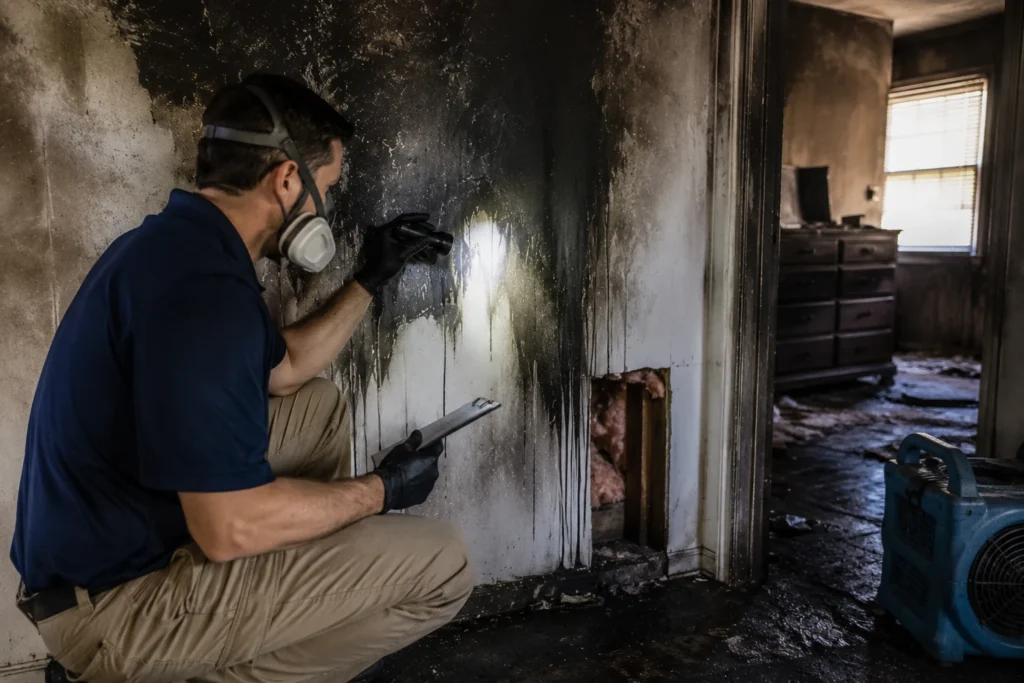
Many property owners rely solely on their own observations. That can be a costly mistake. Smoke damage is often technical. Specialized restoration experts understand where contamination tends to accumulate and how to identify hidden issues. A comprehensive inspection may include:
- Surface testing
- Air quality analysis
- HVAC evaluation
- Contents assessment
- Moisture and contamination mapping
Interestingly, this process shares similarities with evaluating complex property losses in other situations. For example, disputes involving roof damage often arise because hidden problems are overlooked during initial inspections. The same principle applies to smoke losses. In many cases, the challenges resemble What Insurance Adjusters Miss on Roof Claims, where surface-level evaluations fail to identify the full scope of damage. A detailed investigation often reveals a much larger restoration need than initially expected.
Smoke Damage from a Neighbor’s Fire
One of the most surprising claim situations involves fires that occur somewhere else. Imagine your neighbor’s house catches fire. The flames never touch your property. However, smoke enters your home through:
- Attic vents
- Open windows
- HVAC systems
- Door gaps
Now your home smells strongly of smoke. Soot particles appear on surfaces. Personal belongings become contaminated. Can insurance still apply? Potentially, yes. Coverage depends on policy language and claim-specific facts, but smoke contamination does not necessarily require direct flame contact. This scenario occurs more often than many homeowners realize. Properties located near apartment fires, commercial building fires, warehouse fires, and wildfire zones frequently experience secondary smoke damage. For homeowners in Forney, especially in rapidly growing residential areas where homes are located close together, neighboring structure fires can create significant smoke-related losses even when flames never reach the insured property.
Wildfire Smoke Claims Are Becoming More Common
Across the country, wildfire-related smoke claims have become increasingly significant. Many homes survive wildfires completely intact. No structural damage, burned roof, destroyed siding. Yet smoke contamination affects the interior. This creates a unique insurance challenge. Homeowners often argue that extensive cleaning and restoration are necessary. Insurers sometimes focus on the absence of visible fire damage. The disagreement usually centers on contamination levels rather than burned materials. A growing number of environmental experts now perform specialized testing to determine the extent of wildfire smoke infiltration. These evaluations may reveal contamination inside:
- Attics
- Insulation
- Ductwork
- Crawlspaces
- Wall assemblies
The findings often influence claim outcomes significantly.
Smoke Particles Can Affect More Than Surfaces
Smoke is not simply dirt. It contains complex compounds created by combustion. Depending on what burned, smoke may contain residues capable of damaging sensitive materials over time. For example:
- Plastics produce different residues than wood.
- Synthetic materials release different compounds than paper.
- Electrical fires create unique contamination concerns.
Interestingly, the behavior of airborne particles is studied in fields such as Tribology, where scientists examine how surfaces interact with contaminants, friction, and wear. While tribology itself is not related to insurance claims, understanding how microscopic particles interact with materials helps explain why smoke contamination can cause ongoing deterioration long after a fire is extinguished. That is why professional restoration often involves far more than wiping down walls. The goal is to return the property to its pre-loss condition not merely improve appearances.
When Smoke Damage Becomes Significant Enough for Major Restoration
While there is no official threshold that determines How Much Smoke Damage Is Needed for an Insurance Claim, there are situations where smoke contamination becomes extensive enough to require major restoration efforts. At this stage, cleaning a few surfaces is no longer enough. The focus shifts toward restoring the entire property.
Signs of Extensive Smoke Damage
Some warning signs include:
- Strong smoke odors throughout the home
- Visible soot on multiple surfaces
- HVAC contamination
- Smoke staining on ceilings and walls
- Damage to furniture and soft goods
- Corrosion on electronics
- Contamination inside attics and crawlspaces
The more areas affected, the more complex the restoration process becomes. A home may appear clean while still requiring substantial work behind the scenes.
Areas Commonly Requiring Restoration
After significant smoke exposure, restoration professionals often evaluate:
| Property Component | Potential Restoration Needs |
|---|---|
| Walls and Ceilings | Cleaning, sealing, repainting |
| Flooring | Deep cleaning or replacement |
| Furniture | Specialized restoration |
| Clothing | Professional textile cleaning |
| HVAC Systems | Duct cleaning and filtration |
| Electronics | Testing, cleaning, replacement |
| Insulation | Removal and replacement |
| Cabinets and Fixtures | Cleaning and deodorization |
The total cost can rise quickly. In many claims, the restoration expense is driven not by visible damage but by the labor required to locate and eliminate contamination.
Why Insurance Companies Sometimes Undervalue Smoke Damage
Smoke damage claims frequently become the subject of disputes. This does not necessarily mean an insurer is acting improperly. Often, it means different parties have reached different conclusions about the scope of damage. Still, smoke claims are regularly underpaid because hidden contamination is difficult to evaluate.
Focus on What Can Be Seen
Visible damage is easy to document. Hidden contamination is not. When inspections focus primarily on visible soot or staining, portions of the loss may go unnoticed. For example:
- Contaminated insulation
- Smoke inside duct systems
- Odor trapped in framing
- Smoke exposure to electronics
- Contents contamination
These issues may not appear during a brief inspection. However, they can significantly impact restoration costs.
Cleaning Versus Full Restoration
Another common disagreement involves the difference between cleaning and restoring. An insurance estimate may assume that surfaces can simply be cleaned. A restoration contractor may conclude that cleaning alone will not eliminate contamination. The distinction matters. Insurance is generally intended to restore the property to its pre-loss condition. If smoke odors remain or contamination persists, the property has not necessarily been fully restored.
How Insurance Companies Evaluate Smoke Damage Claims
Insurance carriers typically review several factors before determining the value of a smoke damage claim.
The Source of the Smoke
The origin of the smoke often influences the investigation. Examples include:
- Kitchen fires
- Electrical fires
- Fireplace incidents
- Wildfires
- Vehicle fires
- Neighboring structure fires
Different sources produce different contaminants. Understanding what burned helps determine the likely extent of damage.
The Areas Affected
Adjusters often evaluate:
- Number of rooms impacted
- Surface contamination levels
- HVAC involvement
- Personal property exposure
- Structural contamination
The broader the contamination, the greater the restoration requirements may become.
Restoration Costs
Ultimately, many claims come down to dollars and cents. Insurance companies review:
- Contractor estimates
- Restoration reports
- Cleaning invoices
- Replacement costs
- Temporary housing expenses
The goal is to determine what is reasonably necessary to return the property to its prior condition.
How to Strengthen a Smoke Damage Insurance Claim
Documentation can make or break a claim. Many homeowners assume the damage will speak for itself. Unfortunately, that approach often leads to problems. The stronger the documentation, the stronger the claim.
Photograph Everything
Take photographs immediately. Do not focus only on obvious damage. Photograph:
- Walls
- Ceilings
- Furniture
- Electronics
- Clothing
- HVAC vents
- Windows and blinds
- Personal belongings
Take wide shots and close-up images. The more evidence you preserve, the better.
Create Written Notes
Photographs tell part of the story. Written observations provide additional context. Document:
- When the smoke event occurred
- Where odors are strongest
- Rooms affected
- Items damaged
- Changes noticed over time
Small details often become important later.
Preserve Damaged Property
Avoid throwing items away too quickly. Many homeowners unknowingly discard valuable evidence. Instead:
- Photograph items first
- Store them if possible
- Follow insurer instructions
- Maintain inventories
Damaged property often helps establish the extent of contamination.
Obtain Independent Evaluations
Independent inspections can provide valuable support. Examples include:
- Restoration contractors
- Environmental consultants
- HVAC specialists
- Electronics experts
Their findings may identify issues that would otherwise remain undiscovered.
The Role of a Public Adjuster in Smoke Damage Claims
Smoke losses can be surprisingly complex. Many homeowners expect a straightforward process. Sometimes it is. Other times, disagreements emerge regarding:
- Scope of damage
- Restoration methods
- Personal property valuation
- Additional living expenses
- Hidden contamination
That is where a public adjuster may become helpful.
What a Public Adjuster Does
Unlike insurance company adjusters, public adjusters work on behalf of policyholders. Their responsibilities often include:
- Reviewing policy language
- Evaluating damage
- Documenting losses
- Preparing claim submissions
- Negotiating settlements
The objective is to ensure all covered damages are properly considered.
Situations Where Additional Assistance May Help
A public adjuster may be particularly valuable when:
- Smoke contamination is widespread
- Claims involve hidden damage
- Large restoration costs are involved
- Coverage disputes arise
- Settlement offers appear insufficient
Property owners in Forney often encounter these challenges after significant residential and commercial fire losses.
Common Mistakes Homeowners Make After Smoke Damage
Some mistakes can unintentionally reduce claim value. Others can complicate the investigation entirely. Avoiding these pitfalls can improve the overall claims process.
Waiting Too Long to Report the Loss
Many people delay filing because they believe the damage is minor. Then problems worsen. Odors spread. Contamination becomes more apparent. Documentation becomes harder to obtain. Prompt reporting generally helps protect your position.
Attempting Extensive DIY Cleanup
A small amount of emergency cleaning may be appropriate. Aggressive cleaning before documentation is not. Removing evidence too early can make it harder to demonstrate the full extent of the loss.
Failing to Document Personal Property
Homeowners frequently focus on structural damage. Contents matter too. Furniture, electronics, clothing, artwork, collectibles, and household items may all be affected by smoke contamination.A complete inventory can significantly strengthen a claim.
Accepting the First Estimate Without Review
Initial estimates are important. They are not always final. Additional damage is often discovered during restoration. Review estimates carefully and ask questions whenever necessary.
What to Do Immediately After Discovering Smoke Damage
The first few days after a smoke event can have a major impact on the success of a claim. A structured approach helps.
Step 1: Ensure Safety
Confirm that the property is safe to occupy. If necessary, consult fire officials or restoration professionals.
Step 2: Notify Your Insurance Carrier
Report the loss as soon as practical. Provide basic information and request claim instructions.
Step 3: Document Conditions
Photograph everything. Record videos. Create written notes. Preserve evidence.
Step 4: Schedule Professional Inspections
Professional evaluations often reveal contamination that is not immediately visible. Early inspections can be invaluable.
Step 5: Protect the Property
Take reasonable steps to prevent additional damage. Keep receipts for emergency expenses.
Step 6: Maintain Records
Organize:
- Estimates
- Receipts
- Reports
- Correspondence
- Inspection results
Good records often make the claims process smoother.
The Real Question Isn’t How Much Smoke Damage Exists
When homeowners ask, “How Much Smoke Damage Is Needed for an Insurance Claim?”, they are usually trying to determine whether the damage is serious enough to justify filing. That is understandable. However, the better question is often this: “Has smoke caused damage that requires cleaning, restoration, repair, or replacement?” If the answer is yes, a claim may be worth investigating. The size of the loss is only part of the equation. Coverage depends on policy language, the cause of loss, the extent of contamination, and the cost to restore the property. A small amount of visible soot can sometimes lead to thousands of dollars in restoration work. Conversely, a property with little visible evidence may still contain significant hidden contamination. That is why professional evaluations are so important.
Conclusion
There is no fixed rule that determines How Much Smoke Damage Is Needed for an Insurance Claim. Even light smoke contamination can lead to costly cleaning, deodorization, repairs, and restoration. Because much of the damage may be hidden, homeowners should focus on proper documentation and professional inspections rather than visible soot alone. If smoke has affected your property, understanding the true extent of the damage is often the key to securing a fair insurance settlement.
FAQs
Yes. Many insurance policies may cover smoke damage when a covered event causes contamination, even if flames never directly damage the property.
Potentially. Persistent smoke odors can indicate hidden contamination that may require professional cleaning and restoration.
There is usually no minimum amount required. The key question is whether the smoke caused covered damage that requires repair, cleaning, or restoration.
Many policies provide coverage for damaged personal property, including furniture, if the smoke damage resulted from a covered loss.
In many cases, yes. If smoke from a nearby fire enters and damages your property, coverage may be available depending on your policy terms.
Document the damage with photos and videos, then notify your insurance company and arrange for a professional inspection.
Yes. Smoke particles can enter electronic devices and cause corrosion or component failure, sometimes long after the fire event.
They typically evaluate the source of the smoke, extent of contamination, restoration costs, damaged contents, and supporting documentation.
No. Whenever possible, keep damaged items until they have been documented and reviewed as part of the claims process.
You may want professional assistance if the claim is large, involves hidden smoke damage, or if you disagree with the insurance company’s assessment.