
Hailstorms can leave behind obvious destruction. They can also leave behind something much harder to identify damage that sparks disagreements between property owners, contractors, and insurance companies. That is exactly why understanding cosmetic vs functional hail damage is so important. The distinction can influence whether an insurance claim is approved, partially paid, or denied altogether. In some cases, two professionals can inspect the same roof and reach completely different conclusions.
For property owners, that can be frustrating. I’ve seen situations where a roof looked relatively normal from the ground, yet significant functional damage was discovered during a detailed inspection. I’ve also seen heavily dented metal roofs that appeared severe but were ultimately classified as cosmetic damage by insurers.
The difference matters because insurance coverage often hinges on it. Whether you own a home, retail center, warehouse, office building, or multi-family property, understanding how hail damage is evaluated can help you make better decisions after a storm. It can also help you recognize potential claim issues before they become expensive problems.
Understanding Hail Damage
Before discussing insurance claims, it helps to understand what hail actually does to a structure. Hail forms when strong updrafts carry water droplets into freezing layers of the atmosphere. Those droplets continue collecting moisture until they become too heavy and fall to the ground.
The result?
Chunks of ice traveling at surprisingly high speeds.
The amount of damage created depends on several factors:
- Hail size
- Wind speed
- Roof slope
- Roofing material
- Roof age
- Storm direction
- Impact velocity
A one-inch hailstone may cause limited damage on one property while creating significant damage on another. No two roofs respond exactly the same way.
What Happens During a Hailstorm?
Hail develops within powerful thunderstorm systems that contain strong updrafts and unstable atmospheric conditions. In some severe weather events, hail-producing storms become part of a larger weather structure known as a Mesoscale Convective System.
Common Areas Affected by Hail
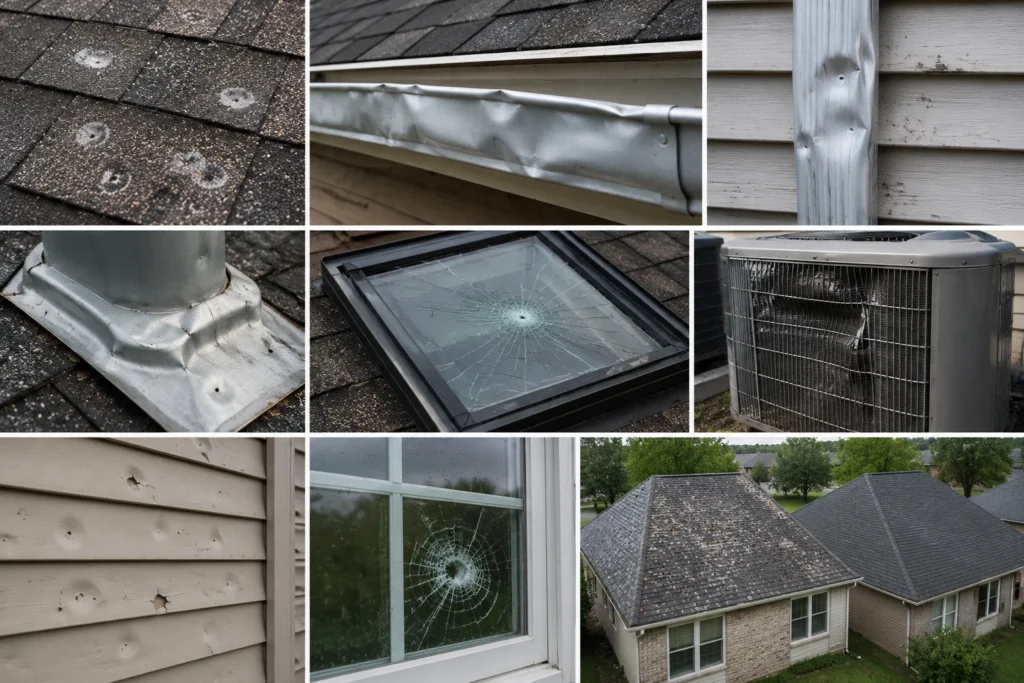
While roofs receive the most attention, hail can affect numerous building components.
These commonly include:
| Component | Potential Damage |
| Roofing Materials | Cracks, dents, bruising |
| Gutters | Dents and deformation |
| Downspouts | Impact damage |
| Flashing | Bending or punctures |
| Skylights | Cracks and fractures |
| HVAC Units | Coil damage |
| Siding | Chips and dents |
| Windows | Cracks and breakage |
These supporting indicators often play a major role during claim evaluations. In fact, visible damage to gutters, soft metals, and HVAC components may help establish the severity of a hail event.
Why Every Hailstorm Produces Different Results
One of the biggest misconceptions in insurance claims is that hail damage should look identical on every property. It doesn’t. A neighboring building may experience substantial roof damage while another property just a few blocks away sustains minimal impacts. Variables such as roof orientation, tree cover, building height, and storm trajectory all influence damage patterns. That is why professional inspections remain critical after significant storms.
What Is Cosmetic Hail Damage?
Cosmetic damage refers to physical changes that affect appearance but do not immediately impair the function of the affected material. Simply put, something may look damaged without necessarily losing its ability to perform its intended purpose. That distinction creates a major challenge during insurance claims.
Examples of Cosmetic Damage
Common examples include:
- Small dents in metal roofing panels
- Minor dings in gutters
- Surface blemishes on flashing
- Light indentations on metal vents
- Cosmetic marks on siding
- Non-penetrating impacts on coated metal surfaces
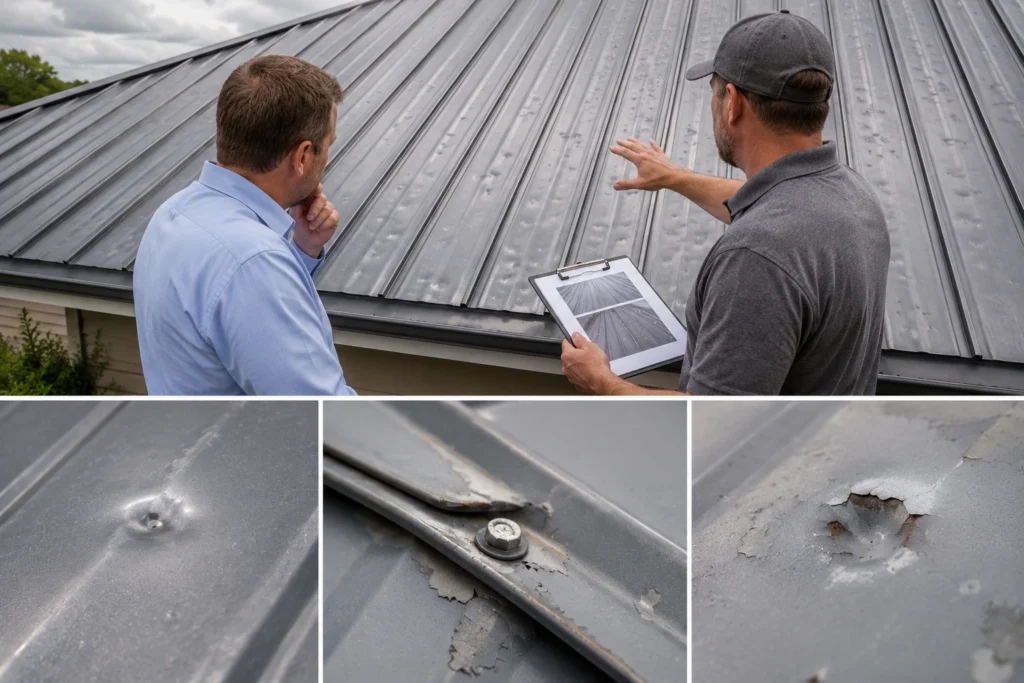
These defects can be visible. Sometimes very visible. Yet appearance alone does not automatically establish functional impairment. For example, a standing seam metal roof may display dozens of hail dents while still effectively shedding water and protecting the building interior. Insurance carriers frequently focus on this distinction.
Why Insurance Companies Pay Close Attention to Cosmetic Damage
From an insurance perspective, cosmetic damage can be difficult to evaluate because it raises an important question: Has the property actually lost functionality? If the answer is no, carriers may argue that repairs are unnecessary. This is particularly common with commercial metal roofing systems. Many policies now contain cosmetic damage exclusions specifically designed to limit coverage when hail affects appearance but not performance. As a result, property owners often find themselves in disputes over whether visible damage truly affects roof functionality.
What Is Functional Hail Damage?
Functional damage is generally more significant. Unlike cosmetic damage, functional damage affects the ability of a component to perform its intended role.
That role may include:
- Keeping water out
- Resisting wind
- Protecting structural elements
- Maintaining weather resistance
- Preserving service life
When those capabilities become compromised, insurers are often more likely to recognize covered damage.
Examples of Functional Hail Damage
Functional damage can include:
- Punctured roofing membranes
- Fractured shingles
- Cracked skylights
- Broken seals
- Damaged flashing
- Open seams
- Water intrusion pathways
- Exposed substrates
These conditions create real performance concerns. And those concerns frequently lead to broader repair recommendations.
Why Functional Damage Often Leads to Coverage
Insurance policies generally exist to protect against physical loss. When hail directly reduces the performance of a building component, the potential for future damage increases dramatically. Water intrusion becomes a concern. Structural deterioration becomes possible. Interior damage becomes more likely. Because of those risks, functional damage often receives greater attention during claim evaluations.
Cosmetic vs Functional Hail Damage: The Critical Difference
Understanding cosmetic vs functional hail damage requires looking beyond appearances. A roof can look terrible yet continue performing adequately. Conversely, a roof can appear relatively normal while suffering hidden functional failures. The distinction is not always obvious.
Quick Comparison
| Factor | Cosmetic Damage | Functional Damage |
| Appearance Affected | Yes | Usually |
| Waterproofing Impact | Typically No | Often Yes |
| Structural Protection | Usually Maintained | Reduced |
| Future Risk | Lower | Higher |
| Coverage Potential | Limited in Some Policies | Often Greater |
This comparison helps explain why disputes arise so frequently. Everyone sees the same damage. Not everyone interprets it the same way.
Roofing Materials and Damage Evaluation
Different roofing materials react differently to hail. That means inspections must be tailored to the specific roofing system involved.
Asphalt Shingle Roofs
Asphalt shingles remain among the most common residential roofing materials. Unfortunately, hail damage can be difficult to identify.
Cosmetic Indicators
Potential cosmetic effects include:
- Surface scuffing
- Minor granule displacement
- Light impact marks
These conditions may not significantly affect performance.
Functional Indicators
More serious findings often include:
- Mat fractures
- Bruising
- Exposed asphalt
- Significant granule loss
- Reduced weather resistance
These conditions can accelerate roof deterioration and shorten service life.
Why Granule Loss Matters
Many homeowners underestimate the importance of roofing granules. Those tiny particles serve a major purpose. Granules protect asphalt shingles from ultraviolet exposure and weather-related deterioration. When hail removes significant amounts of granules, the underlying asphalt becomes vulnerable to accelerated aging.
At first, the roof may still appear functional. Over time, however, the deterioration process often speeds up. Shingles can become brittle, crack more easily, and lose their ability to shed water effectively. This is one reason detailed inspections are so important following a hailstorm.
Metal Roofing Systems
Metal roofs frequently generate some of the most contentious claim disputes. Why? Because dents are often highly visible.
Cosmetic Indicators
Common cosmetic effects include:
- Surface indentations
- Visual imperfections
- Aesthetic distortion
The roof may still function normally despite visible damage.
Functional Indicators
Functional concerns can include:
- Punctures
- Seam separation
- Fastener damage
- Protective coating failure
- Water infiltration points
At that point, performance not appearance becomes the primary concern.
Why Metal Roof Claims Are Different
Unlike asphalt shingles, metal roofs often remain watertight even after sustaining noticeable dents. That creates a challenge. Property owners may view widespread denting as significant damage. Insurance carriers may argue that the roof continues to perform adequately. The truth often lies in the details. A dent alone may be cosmetic. However, if hail impacts distort seams, damage protective finishes, or compromise fastening systems, the conversation changes quickly.
Tile Roofing
Tile systems can experience both cosmetic and functional damage.
Cosmetic Effects
- Surface chips
- Minor edge blemishes
Functional Effects
- Cracks
- Broken sections
- Water intrusion pathways
Even small fractures can compromise long-term performance.
Commercial Flat Roofing Systems
Flat roofs present unique challenges. Impacts may appear insignificant initially. However, hidden membrane damage can become a major issue later.
Cosmetic Effects
- Surface indentations
- Minor impact marks
Functional Effects
- Membrane punctures
- Seam failures
- Compromised drainage performance
Those issues often require immediate attention.
How Insurance Companies Evaluate Hail Claims
Many property owners assume the insurance inspection is the final word. That is not always the case. Insurance adjusters are tasked with evaluating damage and determining whether coverage applies under the policy. However, different professionals may interpret the same evidence differently.
Initial Inspection Process
During inspections, adjusters typically assess:
- Roof conditions
- Exterior damage
- Storm-related impacts
- Supporting evidence
- Repairability
Documentation usually includes photographs, measurements, and inspection notes. Weather data may also be reviewed.
Why Opinions Differ
This is where many disputes begin. Contractors often focus on repair requirements and long-term performance. Insurance representatives focus on policy interpretation and coverage obligations. Both perspectives matter. Yet they do not always align. This gap helps explain many disagreements involving cosmetic vs functional hail damage. In fact, many disputes center around a question frequently raised by property owners: What Insurance Adjusters Miss on Roof Claims. The answer varies by claim, but overlooked issues can include hidden fractures, coating damage, seam separation, fastener impacts, and developing water intrusion risks that are not immediately visible during a brief inspection.
The Role of Documentation During Claim Reviews
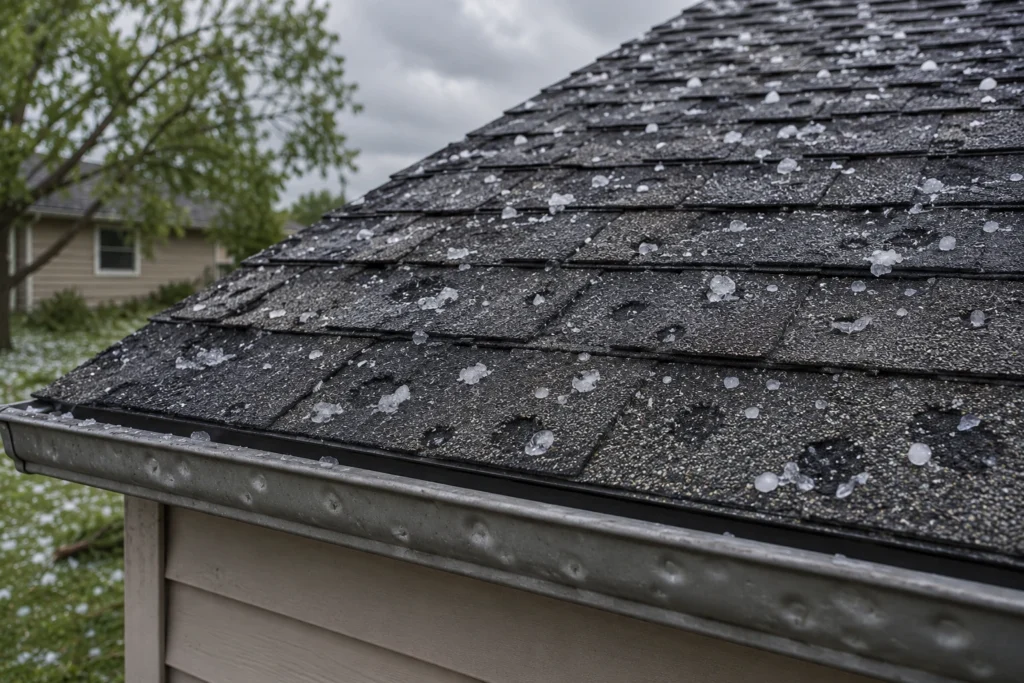
Documentation often becomes the deciding factor in a disputed hail claim. A property owner who provides detailed photographs, inspection reports, weather records, and repair estimates is typically in a stronger position than someone relying solely on verbal descriptions.
The goal is not to overwhelm the claim file. The goal is to create a clear picture of what occurred, when it occurred, and how the damage affected the property. When questions arise regarding cosmetic versus functional damage, strong documentation frequently becomes one of the most persuasive forms of evidence available.
Common Disputes Over Cosmetic vs Functional Damage
Few insurance claim disagreements generate more debate than disputes involving cosmetic versus functional damage. The reason is simple. The financial implications can be significant. If damage is classified as cosmetic, an insurance carrier may determine that repairs are unnecessary or that coverage is limited under the policy. If the same damage is considered functional, the repair scope can increase substantially.
This difference often becomes most apparent with metal roofing systems. A property owner may look at a roof covered in visible dents and reasonably conclude that major damage occurred. A contractor may reach a similar conclusion after conducting an inspection. Meanwhile, an insurance representative may determine that the roof continues to perform as intended and therefore classify the impacts as cosmetic. Neither side necessarily acts in bad faith. Instead, they may simply be applying different standards when evaluating the damage.
Why Metal Roof Claims Generate Frequent Disagreements
Metal roofing systems are specifically designed to withstand severe weather. As a result, visible dents do not always mean the roof has lost functionality. However, impacts can sometimes create issues that extend beyond appearance.
Examples include:
- Damage to protective coatings
- Distortion of seams
- Fastener failures
- Reduced water-shedding performance
- Accelerated corrosion risks
When these conditions exist, a claim that initially appears cosmetic may involve legitimate functional concerns. This is why detailed inspections are so important.
The Challenge of Borderline Damage
Not every claim falls neatly into a cosmetic or functional category. Some impacts exist in a gray area. For example, a hail impact may not currently leak, but it may have damaged a protective coating that helps prevent future corrosion. Is that cosmetic or functional? Opinions may vary. Because these situations are often open to interpretation, documentation becomes critical. The stronger the evidence, the easier it becomes to support a particular position.
Hidden Functional Damage: The Problem Property Owners Cannot See
One of the biggest challenges in hail claims is that not all damage is visible. Some of the most costly problems begin beneath the surface. A roof may appear relatively intact from the ground while hidden damage continues to worsen over time. This is particularly true for aging roofing systems or properties that have experienced multiple storms over several years.
Damage That Is Frequently Overlooked
Hidden functional damage can include:
- Microfractures in asphalt shingles
- Protective coating failures on metal roofs
- Damaged fasteners
- Membrane punctures on flat roofs
- Compromised sealants
- Separation around flashing
- Small water entry points
These issues may not cause an immediate leak. That is precisely why they are often missed. Months later, however, water infiltration can begin. At that point, the original hail event may be far in the past, making documentation and claim support more difficult. This is why experienced inspectors spend time evaluating the entire roofing system rather than focusing solely on obvious impact marks.
Why Hidden Damage Creates Long-Term Problems
Roof systems are designed to work together. A minor failure in one component can affect multiple areas of the property. For example, a damaged flashing section may allow small amounts of water to enter beneath roofing materials. The leak may go unnoticed for months while insulation absorbs moisture and wood decking slowly deteriorates. By the time the problem becomes visible indoors, repairs can be far more extensive than they would have been immediately after the storm.
The Long-Term Risks of Misclassifying Functional Damage
When genuine functional damage is incorrectly classified as cosmetic damage, the consequences can be significant. The damage does not simply disappear because someone labels it differently. Instead, it continues affecting the property.
Water Intrusion
Water is relentless. A small opening created by hail can eventually allow moisture to enter insulation, decking, wall cavities, and ceilings.
The result may include:
- Interior staining
- Damaged drywall
- Insulation deterioration
- Mold growth
- Electrical concerns
- Structural deterioration
Many large insurance claims begin as relatively small roofing problems.
Reduced Roof Lifespan
Roofing materials are designed to withstand years of weather exposure. When hail compromises those materials, their expected lifespan may decrease substantially.
| Roofing Component | Potential Effect of Functional Damage |
| Asphalt Shingles | Accelerated granule loss |
| Metal Roofs | Corrosion and coating failure |
| Tile Roofs | Crack expansion |
| Flat Roof Membranes | Progressive leakage |
The roof may continue functioning temporarily, but its long-term durability has been diminished.
Increased Future Repair Costs
Delayed repairs rarely become less expensive. More often, they become much more expensive. A relatively minor roofing repair today can become a major restoration project tomorrow.
Additional costs may include:
- Interior repairs
- Mold remediation
- Insulation replacement
- Structural repairs
- Temporary protective measures
This is one reason property owners should avoid assuming that all visible dents are harmless. Understanding cosmetic vs functional hail damage requires looking at future performance, not merely present appearance.
Insurance Policy Exclusions and Endorsements
Insurance policies are not identical. Two neighboring property owners can experience the same hailstorm and receive very different claim outcomes based on policy language alone. That reality surprises many people.
Cosmetic Damage Exclusions
Many commercial policies now contain cosmetic damage exclusions. These provisions may limit or eliminate coverage when hail affects appearance without affecting performance.
Common examples include:
- Dented metal roof panels
- Surface blemishes
- Visible impact marks
- Non-penetrating metal damage
The specific wording of these exclusions matters greatly. Small differences in language can create major differences in coverage.
Endorsements That Affect Hail Claims
Policies may also contain endorsements that modify standard coverage. These endorsements can influence:
- Settlement calculations
- Deductibles
- Roof coverage
- Repair obligations
- Replacement provisions
Property owners should carefully review all policy documents before assuming coverage applies. A thorough understanding of policy language often helps avoid unpleasant surprises during the claim process.
Real-World Examples of Functional Hail Damage
Looking at real-world scenarios can help illustrate why the distinction between cosmetic and functional damage matters.
Example 1: Asphalt Shingle Roof
A residential property experienced a severe hailstorm. Initially, the roof appeared relatively intact from the ground. However, a detailed inspection revealed multiple hail bruises and fractured shingle mats. While the impacts were difficult to see, the roof’s weather-resistant barrier had been compromised. The damage was ultimately classified as functional because the shingles could no longer perform as designed.
Example 2: Commercial Metal Roof
A warehouse roof displayed widespread denting after a hailstorm. At first glance, the impacts appeared severe. However, inspectors determined that seams remained intact, coatings remained functional, and no punctures were present. The roof continued performing as intended. As a result, the damage was primarily considered cosmetic.
Example 3: Flat Roofing System
A commercial flat roof showed minimal visible damage. Further investigation revealed multiple membrane punctures caused by hail impacts. Those punctures created pathways for water intrusion. Although the damage was not immediately obvious, it clearly affected roof performance and was classified as functional. These examples demonstrate why visual appearance alone should never determine claim outcomes.
Evidence That Helps Support a Functional Damage Claim
Documentation is one of the most powerful tools available during an insurance claim. Strong evidence often makes the difference between a disputed claim and a successful resolution.
Professional Roof Inspections
A detailed inspection creates a foundation for the entire claim.
Professional assessments typically evaluate:
- Roofing materials
- Flashing systems
- Gutters
- Ventilation components
- Roof penetrations
- Supporting structures
The goal is to identify whether hail has affected performance rather than appearance alone.
Photographic Documentation
Photos remain among the most important forms of claim evidence. Property owners should capture:
- Close-up impact locations
- Wide-angle roof views
- Damaged gutters
- Dented metal components
- Siding impacts
- HVAC damage
- Interior signs of water intrusion
Comprehensive photographs help establish both severity and consistency.
Weather Data and Storm Reports
Independent weather information can strengthen a claim considerably. Useful information includes:
- Recorded hail sizes
- Storm dates
- Wind speeds
- Radar information
- Severe weather reports
These records can help connect observed damage to a specific storm event.
Repair and Replacement Estimates
Multiple estimates may provide valuable insight. Comparing scopes can reveal differences in how damage is interpreted and priced. In some cases, substantial pricing gaps arise because one party identifies functional damage while another classifies the same impacts as cosmetic.
Best Practices for Documenting Hail Damage
Strong documentation can significantly improve claim accuracy. Property owners should begin collecting information as soon as conditions are safe after a storm.
Take Comprehensive Photographs
Photographs should include:
- Roof surfaces
- Gutters
- Downspouts
- Flashing
- Skylights
- HVAC equipment
- Siding
- Interior damage
Both close-up and wide-angle images are valuable. Together, they provide context and detail.
Maintain a Storm Timeline
Keep records of:
- Storm dates
- Inspection dates
- Contractor visits
- Insurance communications
- Repair discussions
A clear timeline can help establish the sequence of events.
Preserve All Written Communications
Save:
- Emails
- Inspection reports
- Estimates
- Claim letters
- Photographs
Organized records often become valuable if disputes arise later.
Consider Follow-Up Inspections
Some forms of functional damage may not become immediately apparent. Follow-up inspections can help identify developing issues before they evolve into larger losses. This proactive approach often saves both time and money.
How Public Adjusters Help Resolve Hail Damage Disputes
Insurance policies are detailed documents. Coverage decisions often depend on precise language and technical interpretations. That is where public adjusters can play an important role.
Understanding Policy Language
Many hail-related disputes involve:
- Cosmetic damage exclusions
- Coverage limitations
- Replacement cost provisions
- Actual cash value provisions
- Endorsements
- Deductibles
Understanding how these provisions interact can be critical.
Independent Damage Evaluation
Public adjusters represent policyholders rather than insurance carriers.
Their role often includes:
- Reviewing damage documentation
- Evaluating repair scopes
- Identifying overlooked issues
- Supporting claim negotiations
This independent perspective can help clarify disputes involving cosmetic vs functional hail damage.
Negotiating Fair Settlements
Claim negotiations frequently involve competing interpretations. One side may believe the roof remains functional. The other may believe replacement is warranted. A well-documented position supported by evidence often carries significant weight during discussions.
Why Hail Damage Is a Significant Concern in Forney, Texas
North Texas experiences some of the most active hail activity in the country. Large hail events are not uncommon. For property owners in Forney, that reality creates ongoing risks for both residential and commercial buildings. Storms can develop rapidly and produce damage across wide geographic areas. In many cases, property owners may not realize the extent of the damage until months later.
Challenges Facing Property Owners in Forney
Several factors increase exposure:
- Frequent severe thunderstorms
- Aging roofing systems
- Rapid temperature changes
- High wind events
- Repeated storm activity
Even a relatively brief storm can create substantial roofing damage. That is why prompt inspections remain important following major weather events.
Why Early Inspections Matter
Early inspections help:
- Identify hidden damage
- Preserve evidence
- Document storm impacts
- Support insurance claims
- Prevent secondary damage
Waiting too long can complicate matters. Evidence fades. Repairs become more expensive. Disputes become harder to resolve. For many property owners in Forney, a thorough inspection immediately after a hailstorm can prevent far larger problems later.
Steps Property Owners Should Take After a Hailstorm
The hours and days following a storm can significantly influence the success of an insurance claim. A systematic approach is often best.
Conduct a Safe Visual Inspection
Begin with ground-level observations.
Look for:
- Damaged gutters
- Dented downspouts
- Siding impacts
- Broken windows
- Damaged outdoor equipment
Avoid climbing onto the roof unless properly trained and equipped.
Document Everything
Photographs should be taken as soon as conditions are safe.
Capture:
- Exterior damage
- Roof-related indicators
- Interior moisture issues
- Fallen debris
The more documentation available, the stronger the claim file may become.
Avoid Immediate Assumptions
Some property owners assume visible dents guarantee insurance coverage. Others assume a lack of obvious damage means everything is fine. Neither assumption is reliable. Professional evaluation remains important.
Schedule a Detailed Inspection
An experienced inspection can identify issues that may not be visible from the ground.
This is particularly important for:
- Metal roofs
- Commercial properties
- Flat roofing systems
- Older roofs
Review Your Policy
Take time to understand:
- Deductibles
- Coverage limitations
- Cosmetic damage exclusions
- Claim deadlines
Policy language matters.
Maintain Claim Records
Keep organized copies of:
- Inspection reports
- Estimates
- Correspondence
- Photos
- Receipts
Good recordkeeping often simplifies the claims process.
Consider Independent Assistance
If disagreements arise regarding cosmetic vs functional hail damage, independent claim professionals may provide additional insight. The objective should always be a complete and accurate assessment of the loss. Property owners throughout Forney frequently discover that early documentation and thorough inspections provide the strongest foundation for successful claim outcomes.
Why Early Action Matters After a Hailstorm
One of the biggest mistakes property owners make is waiting too long. Hail damage does not always announce itself with active leaks or dramatic structural failures. In many cases, deterioration occurs gradually. The longer damage remains unaddressed, the greater the risk of secondary problems.
Those secondary issues may include:
- Interior water damage
- Mold growth
- Insulation deterioration
- Structural weakening
- Increased repair costs
Prompt inspections provide an opportunity to identify concerns while evidence remains fresh. They also help establish a clearer connection between storm damage and observed conditions. From a claims perspective, that timing can be extremely important. The sooner damage is identified and documented, the easier it often becomes to support a claim and pursue appropriate repairs.
Conclusion
Understanding cosmetic vs functional hail damage is essential for any property owner dealing with a hail-related insurance claim. While cosmetic damage generally affects appearance, functional damage impacts performance, durability, and long-term protection. The challenge is that the difference is not always obvious. Some roofs display dramatic visual impacts while remaining fully functional. Others suffer hidden damage that may not become apparent until months later.
That is why thorough inspections, detailed documentation, and careful claim evaluations are so important. Property owners who understand how insurers evaluate hail damage are often better prepared to identify potential issues, support their claims, and protect their investments. Ultimately, the goal is not simply to determine whether hail left a mark. The goal is to determine whether the storm affected the property’s ability to perform as intended. That distinction lies at the heart of every cosmetic vs functional hail damage claim and can significantly influence the outcome of the insurance process.
FAQs
Coverage depends on the policy language. Some policies cover cosmetic damage, while others contain exclusions that limit or eliminate coverage.
Functional hail damage affects a roof’s ability to protect the structure from weather, moisture, or other environmental conditions.
Yes. While many dents are cosmetic, some impacts can damage seams, coatings, or fasteners and affect roof performance.
Insurance companies evaluate whether the hail impact affects the material’s intended purpose, durability, or weather-resistant capabilities.
Yes. Even when performance is unaffected, visible hail damage may negatively impact appearance and marketability.
A professional inspection is recommended after significant hail events because some forms of functional damage are difficult to identify from the ground.
Photographs, inspection reports, weather data, repair estimates, and documentation of storm-related impacts can strengthen a claim.
Metal roofs frequently show visible dents that may not affect performance, creating disagreements over whether the damage is cosmetic or functional.
Yes. Small fractures, punctures, or damaged flashing can allow moisture intrusion that may not become visible for months.
A public adjuster may be helpful when there is a disagreement regarding damage classification, repair scope, or settlement value.