
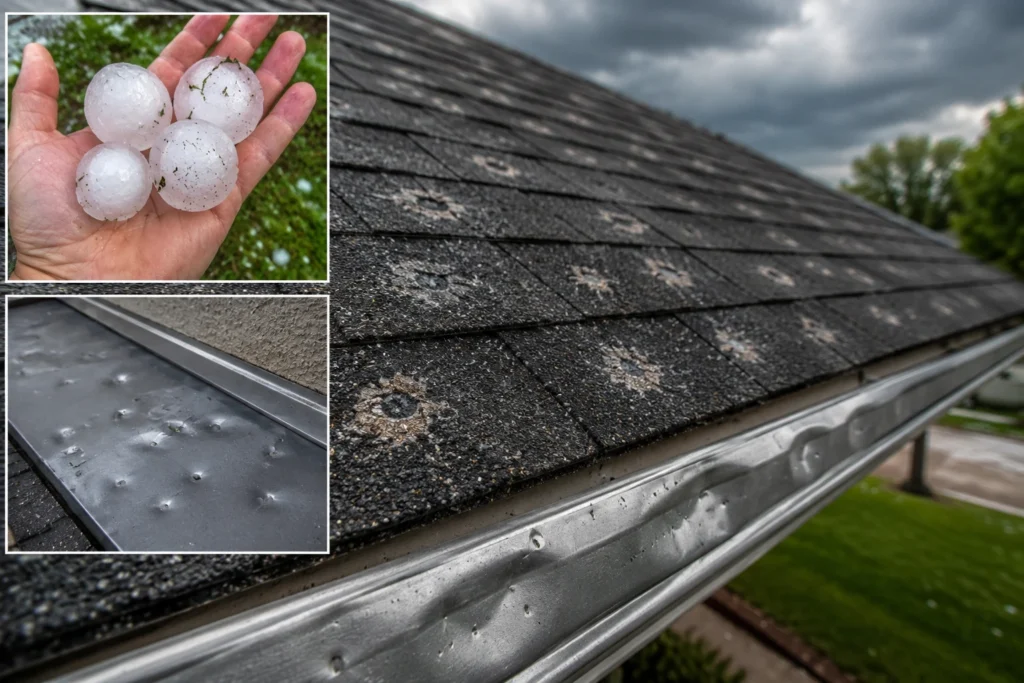
A heavy hail roof damage claim can quickly become one of the most stressful insurance situations a homeowner faces. One storm passes through. The sky clears. Everything seems normal from the ground. Then weeks later, leaks appear, shingles begin deteriorating, and repair estimates start climbing. I’ve seen homeowners make the same mistake repeatedly. They assume hail damage is obvious.
It often isn’t. Many roofs suffer significant storm damage that remains hidden until water intrusion, structural issues, or insurance disputes emerge months later. Unfortunately, by that point, proving the damage becomes much more difficult. If your property recently experienced a severe hailstorm, understanding the claims process can save thousands of dollars and countless headaches. This guide walks through every step of a heavy hail roof damage claim, from identifying damage to negotiating with your insurance company and protecting your investment.
Understanding Heavy Hail Roof Damage
Not all hailstorms are equal. Some leave behind minor cosmetic dents. Others create widespread destruction that compromises the entire roofing system.
Heavy hail generally refers to hailstones large enough to cause measurable property damage. While even smaller hail can harm aging roofs, larger hailstones often create immediate impacts that reduce the lifespan and performance of roofing materials.
What Makes Hail So Damaging?
The answer is simple. Velocity.
Hailstones fall at significant speeds, and the larger they become, the more force they generate upon impact. A storm may only last fifteen minutes, but those few minutes can create damage worth tens of thousands of dollars.
Factors that influence damage severity include:
- Hail size
- Wind speed
- Roof slope
- Roofing material
- Roof age
- Storm duration
A newer roof may survive a storm with limited damage, while an older roof subjected to the same conditions may require full replacement.
How Different Roofing Materials React to Hail
Every roofing system responds differently.
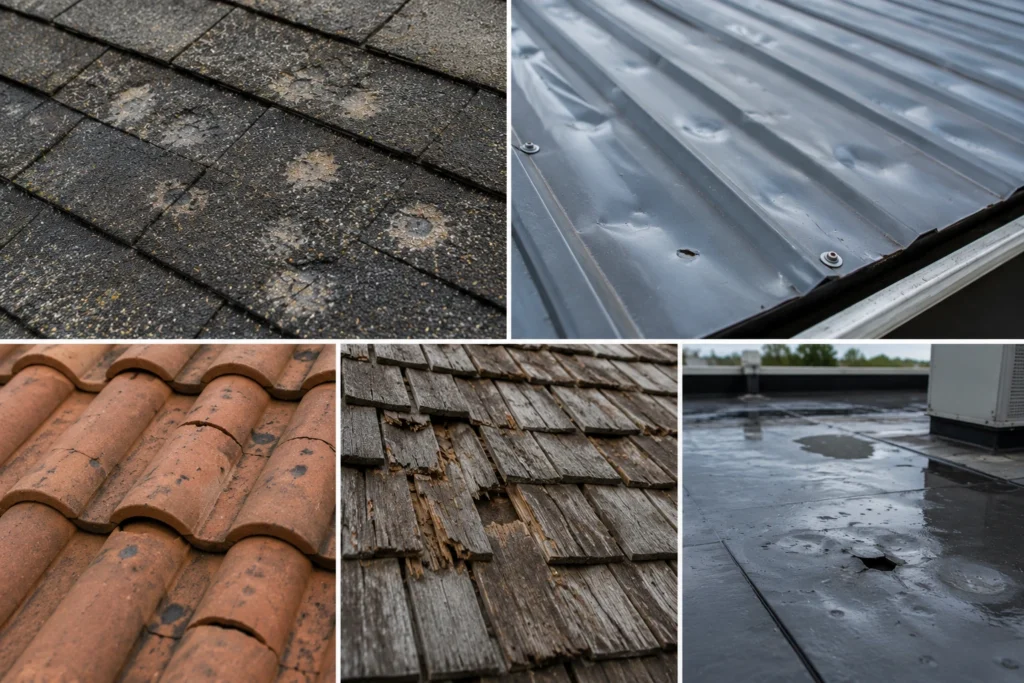
| Roofing Material | Common Hail Damage |
| Asphalt Shingles | Granule loss, bruising, cracking |
| Metal Roofing | Dents, coating damage |
| Clay Tile | Cracks and fractures |
| Concrete Tile | Surface breakage |
| Wood Shake | Splitting and impact marks |
| Stone-Coated Steel | Dents and protective coating damage |
Damage isn’t always visible from the street. In many cases, the most serious issues are only discovered through a professional inspection.
Why Some Roofs Experience More Damage Than Others
Two neighboring homes can experience dramatically different outcomes. Why? Several factors influence a roof’s ability to withstand severe weather. Age matters. Maintenance matters. Installation quality matters. Even the direction your home faces can affect how hail impacts the roof surface. As roofing materials age, they become less flexible. Instead of absorbing impact energy, they crack, fracture, or lose protective granules more easily. That creates the perfect setup for future leaks.
Common Signs of Hail Damage on a Roof
Many homeowners expect dramatic destruction. Sometimes it happens. Other times, hail damage is surprisingly subtle.
Visible Roof Damage
The most common indicators include:
- Dark impact spots on shingles
- Circular bruising
- Missing granules
- Cracked shingles
- Torn roofing materials
- Exposed asphalt matting
These signs often indicate that the roof’s protective layer has been compromised. Once that protection disappears, deterioration accelerates.
Damage Beyond the Roof
Insurance companies rarely evaluate the roof alone. Additional storm-related damage often strengthens a claim.
Look for:
- Denting on gutters
- Damaged downspouts
- Broken window screens
- Cracked siding
- Damaged fencing
- Dented air conditioning units
These impact points help establish the severity of the storm.
Hidden Damage Homeowners Often Miss
This is where problems begin. Water barriers may be damaged beneath the shingles. Flashing can loosen. Fasteners may weaken. Moisture can begin entering the structure without creating immediate visible symptoms. Months later, homeowners discover mold, ceiling stains, or attic damage and wonder how it happened. The answer often traces back to a hailstorm.
What to Do Immediately After a Hailstorm
The hours following a severe storm are critical. Every action you take can influence the outcome of a future heavy hail roof damage claim.
Prioritize Safety
Never climb onto a roof immediately after a storm. Wet surfaces create significant fall risks.
Instead:
- Stay on the ground
- Look for visible damage
- Check interior ceilings
- Inspect attic spaces safely
- Monitor for active leaks
Safety always comes first.
Document Everything
Documentation becomes your strongest ally. Take photographs immediately.
Capture:
- Roof surfaces visible from the ground
- Gutters
- Siding
- Windows
- Outdoor equipment
- Fallen debris
Use both wide-angle and close-up images. The more evidence you gather, the stronger your position becomes.
Prevent Additional Damage
Insurance policies generally require homeowners to mitigate further losses. That means taking reasonable steps to protect the property.
Examples include:
- Installing emergency tarps
- Covering broken windows
- Removing dangerous debris
- Preventing water intrusion
Save every receipt. Those expenses may be reimbursable.
How Insurance Companies Evaluate Hail Damage Claims
Many homeowners assume filing a claim automatically leads to payment. Unfortunately, the process is more complicated. Insurance companies investigate every claim before determining coverage.
The Initial Claim Filing Process
Typically, homeowners:
- Contact their insurance carrier.
- Report storm damage.
- Receive a claim number.
- Schedule an inspection.
At this stage, organization matters.
Create a claim folder containing:
- Photos
- Videos
- Contractor reports
- Receipts
- Weather records
- Correspondence
Strong records often lead to smoother outcomes.
The Insurance Inspection
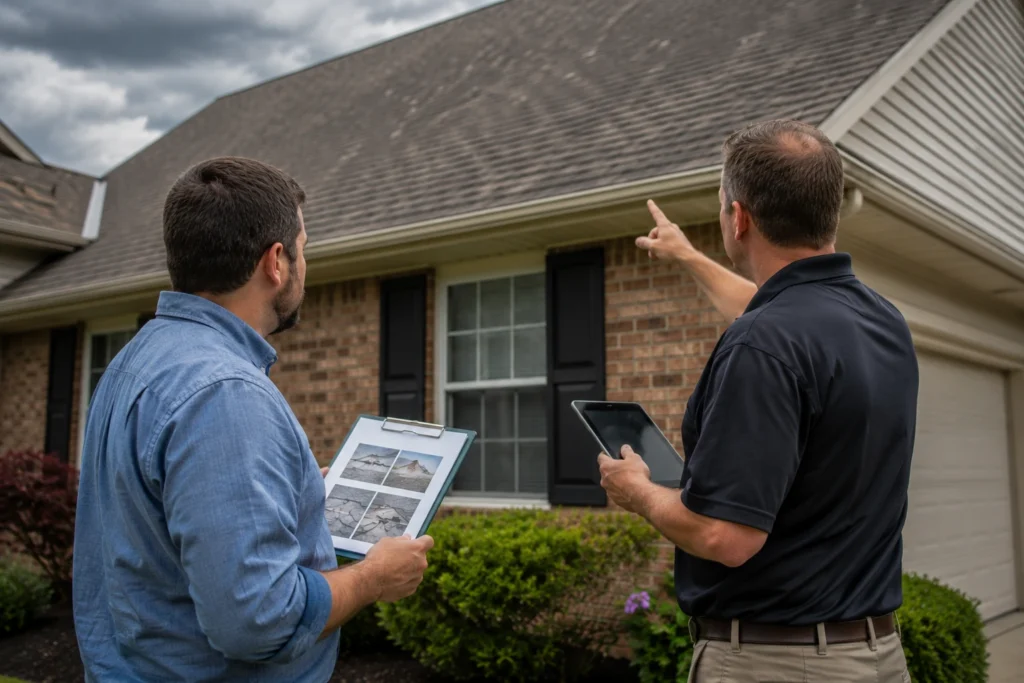
An adjuster is assigned to inspect the property.
During the inspection, they typically evaluate:
- Roofing materials
- Exterior surfaces
- Structural components
- Interior damage
- Storm-related impact evidence
The adjuster’s findings heavily influence the claim decision. However, adjusters can miss damage. It happens more often than many homeowners realize.
Factors That Influence Approval
Several variables affect claim outcomes.
These include:
| Factor | Impact on Claim |
| Quality of Documentation | High |
| Policy Coverage | High |
| Roof Condition | Moderate |
| Inspection Findings | High |
| Timing of Claim | High |
| Supporting Evidence | High |
The strongest claims are supported by extensive documentation and professional inspections.
Common Reasons Heavy Hail Roof Damage Claims Are Denied
Denials are frustrating. Yet many occur for predictable reasons. Understanding them helps homeowners avoid costly mistakes.
Insufficient Documentation
Evidence drives insurance decisions. Without documentation, proving the extent of damage becomes difficult.
Weak claims often lack:
- Photographs
- Inspection reports
- Contractor evaluations
- Repair estimates
Strong evidence changes everything.
Wear and Tear Disputes
Insurance covers sudden storm damage. It generally does not cover gradual deterioration. This distinction creates frequent disagreements. Insurers may argue damage resulted from age rather than hail. Homeowners may disagree. Professional inspections often become critical in resolving these disputes.
Delayed Reporting
Time matters. The longer homeowners wait, the harder it becomes to establish a direct connection between the storm and the damage. Prompt reporting demonstrates diligence and strengthens credibility.
Pre-Existing Conditions
Insurance carriers may deny portions of claims if they determine certain issues existed before the storm.
Examples include:
- Prior leaks
- Aging shingles
- Existing structural problems
- Deferred maintenance
Good maintenance records can help counter these arguments.
The Importance of a Professional Roof Inspection
This may be the single most important step in the entire process. A professional inspection provides independent documentation of damage. That documentation often becomes the foundation of a successful heavy hail roof damage claim.
What a Comprehensive Inspection Includes
Quality inspections evaluate:
- Roof coverings
- Flashing systems
- Ridge caps
- Gutters
- Attic spaces
- Structural components
Inspectors document findings through photographs and written reports. These reports can become valuable evidence during claim negotiations.
Why Independent Documentation Matters
Insurance inspections are important. Independent inspections are equally important. An experienced roofing professional may identify damage overlooked during the initial insurance inspection. This can dramatically change the scope and value of a claim.
Supporting Supplemental Claims
Not all damage appears immediately. Additional problems often emerge during repairs. When that happens, homeowners may need to submit supplemental claims. Independent inspection reports provide the evidence necessary to support those requests.
Understanding Your Insurance Settlement
Receiving a settlement estimate often creates confusion. Many homeowners focus only on the total number. That can be a mistake. Understanding how the settlement is calculated is equally important.
Actual Cash Value (ACV)
Actual Cash Value considers depreciation. In simple terms, the insurer pays the current value of the damaged roof rather than the cost of replacing it. Older roofs often generate lower ACV payments because depreciation reduces the payout amount.
Replacement Cost Value (RCV)
Replacement Cost Value works differently. RCV coverage may ultimately pay the amount required to replace damaged materials with comparable products.
The process generally involves:
- Initial payment.
- Completion of repairs.
- Submission of final documentation.
- Release of recoverable depreciation.
This structure allows homeowners to recover additional funds after repairs are completed.
Understanding Deductibles
No discussion of a heavy hail roof damage claim is complete without mentioning deductibles. The deductible represents the homeowner’s share of the loss.
Depending on the policy, deductibles may be:
- Fixed dollar amounts
- Percentage-based
- Wind and hail specific
Understanding these provisions before a storm occurs can eliminate unpleasant surprises later.
What Happens If the Insurance Estimate Is Too Low?
Many homeowners receive an insurance estimate and immediately focus on one number. The settlement amount. However, the details inside the estimate are often more important than the total itself. A claim can appear fair on the surface while missing critical repair items hidden within the scope of work.
Review the Scope Carefully
Compare the insurance estimate against contractor findings.
Look for:
- Missing roofing components
- Incomplete tear-off costs
- Underestimated material quantities
- Missing flashing replacements
- Ventilation upgrades
- Code-required improvements
Small omissions add up quickly. A missing line item here and a missing line item there can easily create thousands of dollars in uncovered expenses.
Compare Multiple Professional Opinions
One estimate should never become your only source of information. Independent roofing contractors frequently identify repair requirements that insurance adjusters overlook. Reviewing multiple opinions helps create a clearer picture of the true extent of damage.
Filing a Supplemental Claim
Supplemental claims are common. Very common. As repairs begin, contractors often uncover additional storm-related damage beneath the surface.
Examples include:
- Damaged decking
- Wet insulation
- Hidden moisture intrusion
- Additional structural concerns
- Previously concealed impact damage
When supported by proper documentation, supplemental claims can help recover additional funds needed to complete repairs properly.
Negotiating with the Insurance Company
Negotiation is often part of the process. This does not mean the insurer is acting improperly. It simply means different parties may view the scope of damage differently.
Successful negotiations rely on:
- Detailed reports
- Professional inspections
- Photographs
- Repair estimates
- Building code documentation
Facts tend to carry far more weight than opinions.
How a Public Adjuster Can Help With a Heavy Hail Roof Damage Claim
Many homeowners have never worked with a public adjuster. Others do not realize public adjusters represent policyholders rather than insurance companies. That distinction matters. A lot.
What Does a Public Adjuster Actually Do?
A public adjuster assists homeowners by:
- Reviewing policy language
- Documenting damages
- Organizing claim evidence
- Preparing claim submissions
- Managing communications
- Negotiating settlements
Their goal is simple. Help ensure the claim accurately reflects the full extent of covered damage.
Why Documentation Matters
Insurance claims are evidence-driven. The stronger the documentation, the stronger the claim. Public adjusters spend significant time gathering and organizing evidence because details influence outcomes. Photographs. Inspection reports. Weather records. Repair estimates. Everything contributes to the overall picture.
When Homeowners Should Consider Professional Representation
Certain situations often justify additional assistance.
Examples include:
| Situation | Potential Benefit |
| Large Losses | Better claim organization |
| Claim Denials | Additional evidence review |
| Underpaid Claims | Negotiation support |
| Complex Damage | Detailed documentation |
| Multiple Structures | Comprehensive claim management |
The larger the claim becomes, the more valuable expert guidance often becomes. The phrase Why a Public Adjuster Changes the Outcome of Your Insurance Claim is not marketing hype. In many situations, it comes down to documentation quality, policy interpretation, and persistence throughout negotiations.
Heavy Hail Damage Challenges Faced by Homeowners in Forney
Storms are part of life in Texas. However, homeowners in Forney face unique challenges when severe hailstorms move through the area. Large hail events can affect entire neighborhoods within minutes. The damage may be widespread, but every property responds differently.
Why Hail Is a Serious Threat
Texas consistently experiences some of the most severe hail activity in the country. Roofing systems endure tremendous stress during major weather events.
As a result, homeowners frequently face:
- Roof replacement needs
- Gutter damage
- Siding damage
- Window damage
- Water intrusion
The costs can become substantial very quickly.
Common Claim Issues in Forney
Homeowners in Forney often encounter similar insurance challenges.
These include:
- Disputes regarding roof age
- Partial claim approvals
- Underestimated repair costs
- Code upgrade disagreements
- Questions about pre-existing damage
Understanding these issues before filing a claim helps homeowners prepare stronger documentation from the start.
Protecting Your Property Before the Next Storm
Preparation is often overlooked. That is unfortunate because preventive measures can simplify future claims.
Recommended actions include:
- Annual roof inspections
- Maintaining maintenance records
- Photographing property conditions
- Keeping contractor information accessible
- Reviewing insurance coverage annually
Preparation today may save significant frustration tomorrow.
Heavy Hail Roof Damage Claim Timeline
Homeowners often ask how long the process takes. The answer depends on claim complexity. However, most claims follow a fairly predictable timeline.
Days 1–3 After the Storm
Focus on immediate actions.
Tasks include:
- Safety inspections
- Temporary mitigation
- Photographs
- Documentation
- Initial contractor contact
These first few days are critical.
Week 1–2
During this stage, homeowners typically:
- File insurance claims
- Schedule inspections
- Gather supporting evidence
- Begin repair planning
Organization remains essential.
Weeks 2–6
This is usually when:
- Insurance inspections occur
- Estimates are prepared
- Coverage decisions are issued
- Settlement discussions begin
Some claims move quickly. Others require additional review.
Months 1–3
More complex claims may enter negotiation.
Common activities include:
- Supplemental claims
- Additional inspections
- Contractor reviews
- Settlement revisions
Patience becomes important during this phase. Strong documentation often determines how smoothly negotiations proceed.
Mistakes That Can Hurt Your Hail Damage Claim
Many claim problems are avoidable. Unfortunately, homeowners often make the same mistakes after major storms.
Waiting Too Long
Delays create complications. Insurance carriers may question whether damage resulted from the reported storm or another event. Prompt action strengthens credibility.
Throwing Away Evidence
Damaged materials can become important evidence. Whenever possible, preserve:
- Broken roofing materials
- Damaged gutters
- Impacted components
- Inspection records
Evidence matters.
Accepting the First Estimate Without Review
An estimate is not automatically final. Review every line item carefully. Many successful supplemental claims begin with homeowners identifying missing repair components.
Failing to Maintain Records
Documentation should be organized from day one.
Maintain copies of:
- Emails
- Photographs
- Inspection reports
- Estimates
- Receipts
- Policy documents
A well-organized file often becomes a powerful asset during negotiations.
Performing Major Repairs Too Soon
Emergency mitigation is appropriate. Permanent repairs before documentation is completed can create problems. Allow inspections to occur whenever possible before replacing damaged materials.
Building a Stronger Claim From Day One
Successful outcomes rarely happen by accident. Strong claims are built. They are supported by evidence, organization, and persistence. Homeowners who take photographs immediately, schedule professional inspections quickly, maintain accurate records, and understand their policy provisions generally place themselves in a much stronger position than those who wait. Insurance claims are ultimately documentation projects. The better the documentation, the better the opportunity for a fair resolution.
While researching complex topics related to insurance and risk assessment, even highly technical concepts such as Bayesian inference demonstrate how evidence and probability influence decision-making. Insurance claims operate in a similar way strong evidence frequently leads to stronger outcomes. For homeowners dealing with a heavy hail roof damage claim, the process can feel overwhelming at first. Yet understanding how insurers evaluate damage, how settlements are calculated, and how evidence influences claim decisions creates a significant advantage. Whether the damage involves a few impacted shingles or a complete roof replacement, knowledge remains one of the most valuable tools available.
If your property in Forney has recently experienced a severe hailstorm, act quickly. Document the damage. Protect the property. Obtain professional inspections. Review every estimate carefully. Most importantly, ensure your claim accurately reflects the true extent of the loss. Taking the right steps early can make a substantial difference in both the speed and outcome of your heavy hail roof damage claim.
FAQs
Common signs include bruised shingles, missing granules, dents on metal surfaces, and damaged gutters. A professional inspection can identify damage that may not be visible from the ground.
The deadline varies by policy and state regulations, but it’s always best to report damage as soon as possible after a storm to avoid complications.
If the hail damage is extensive and covered under your policy, the insurer may approve a full replacement. The final decision depends on the extent of damage and policy terms.
Yes. Hail can weaken roofing materials and waterproof barriers, allowing moisture intrusion that may not become noticeable until much later.
Take photos and videos of the roof, gutters, siding, windows, and any visible property damage. Keep records of inspections, estimates, and repairs.
Actual Cash Value (ACV) factors in depreciation, while Replacement Cost Value (RCV) may cover the cost of replacing damaged materials with comparable new materials.
Claims are often denied because of insufficient documentation, delayed reporting, pre-existing damage, or disputes over whether damage was caused by hail.
Yes. Independent inspections often identify damage that may be overlooked during the insurance company’s inspection and can strengthen your claim.
In many cases, yes. Supplemental claims allow homeowners to seek additional compensation when hidden storm damage is discovered during repairs.
A public adjuster may be helpful if your claim is denied, underpaid, complex, or involves significant property damage that requires detailed documentation and negotiation.