
Metal roofs have earned a reputation for strength. They withstand intense sun, high winds, heavy rain, and years of exposure to the elements. Yet even the toughest roofing systems can suffer damage during severe hailstorms. That is why understanding the signs of hail damage on metal roofs is so important. What appears to be a few harmless dents may actually indicate deeper problems that affect waterproofing, structural performance, and insurance claim outcomes.
In North Texas, hailstorms are a regular threat. Property owners in Forney often experience storms capable of producing hail large enough to damage roofing systems, gutters, vents, and other exterior components. While some hail damage is obvious, other forms can remain hidden until leaks, corrosion, or structural issues emerge months later. I’ve seen many property owners assume their metal roof survived a storm simply because it did not leak immediately. Unfortunately, that assumption can become costly. This guide explains how hail affects metal roofing systems, the warning signs to look for, and the steps property owners in Forney should take after a major hail event.
Understanding How Hail Affects Metal Roofing Systems
Metal roofs are incredibly durable, but they are not indestructible. When hailstones strike a metal roof, the resulting damage depends on several variables:
- Hail size
- Wind speed
- Roof pitch
- Metal thickness
- Roof age
- Existing wear conditions
- Storm direction
A one-inch hailstone falling straight down may create minimal damage. A two-inch hailstone driven by strong winds can create significant impact damage across multiple roof sections. The challenge is that not all hail damage looks dramatic. Some impacts create obvious dents. Others affect coatings, seams, fasteners, or waterproofing components that may not become apparent until later.
Types of Metal Roofs Commonly Seen in Forney
Different roofing systems react differently to hail impacts.
Common metal roofing systems include:
| Roof Type | Typical Hail Response |
| Standing Seam | Denting around panels and seams |
| Corrugated Metal | Visible impact depressions |
| Exposed Fastener Systems | Damage around screws and washers |
| Stone-Coated Metal | Granule displacement and impact marks |
| Commercial Metal Panels | Large dented sections and seam issues |
Understanding your roof type helps determine what damage indicators should receive the most attention.
Dents and Dings in Roof Panels
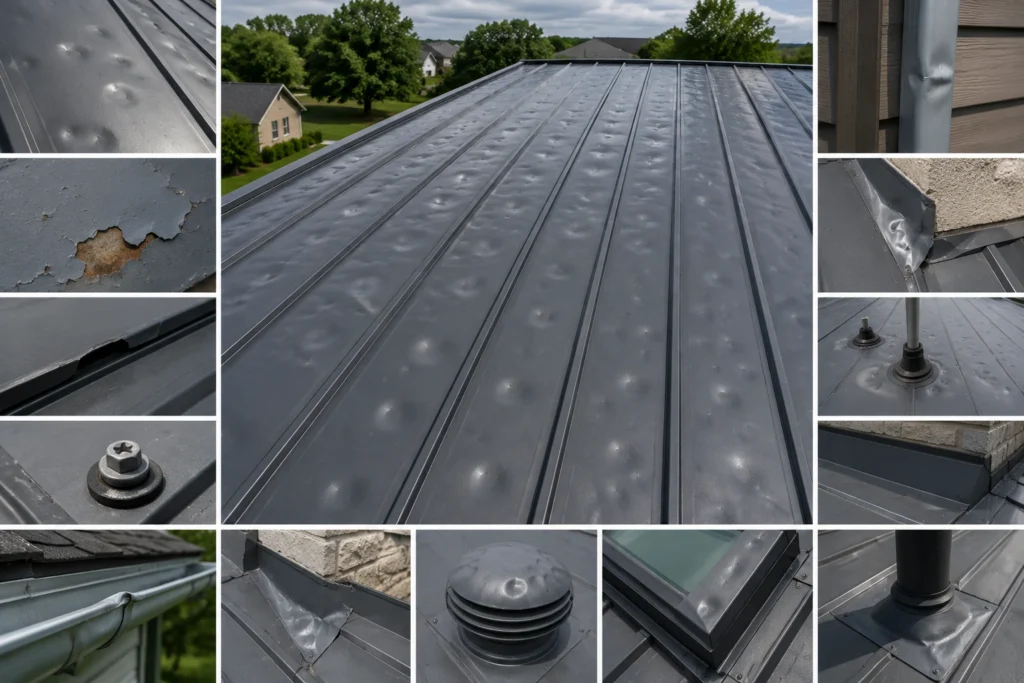
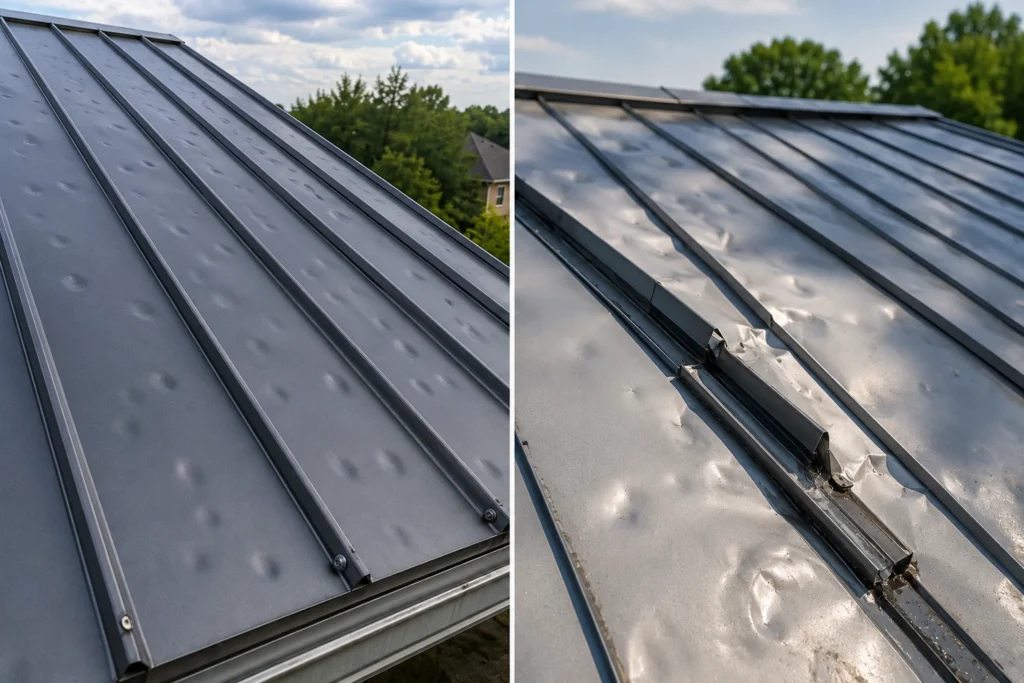
When discussing the signs of hail damage on metal roofs, dents are usually the first thing people think about. For good reason. Dents are among the most visible forms of hail damage.
What Hail Dents Typically Look Like
Hail dents often appear as:
- Circular depressions
- Oval-shaped impacts
- Random patterns across roof surfaces
- Concentrated damage on storm-facing slopes
The pattern matters. Foot traffic damage often follows walking paths. Hail damage usually appears scattered and irregular. Professional inspectors evaluate both the size and distribution of dents to determine whether they likely resulted from a hailstorm.
Why Dent Size Matters
Not all dents carry the same significance. Small cosmetic dents may affect appearance while having little impact on performance.
Larger dents can:
- Distort panel shapes
- Affect drainage patterns
- Create stress points
- Increase future corrosion risks
The deeper the dent, the greater the likelihood that additional inspection is necessary.
Cosmetic Damage vs Functional Damage
Insurance disputes frequently arise over this distinction. A roof may remain watertight while showing extensive denting. Insurance carriers sometimes classify such impacts as cosmetic damage. However, extensive denting can still affect property value, aesthetics, and long-term durability. The classification often becomes a central issue during hail claims.
Chipped, Cracked, or Missing Paint Coatings
Many metal roofs rely on protective coating systems. These coatings do more than improve appearance.
They provide critical protection against:
- Corrosion
- Oxidation
- Moisture intrusion
- Ultraviolet degradation
When hail strikes with enough force, coatings can become damaged.
Warning Signs of Coating Damage
Inspect for:
- Chipped paint
- Cracked finishes
- Surface fractures
- Exposed bare metal
- Flaking protective layers
At first glance, coating damage may seem minor. It is not. Even small coating failures can expose underlying metal to environmental conditions. Over time, corrosion may begin developing in those areas.
Why Coating Damage Matters
Metal roofing systems depend on their protective finishes. When coatings fail, the roof becomes more vulnerable to long-term deterioration. This is especially important in regions where roofs face constant weather exposure. A few small chips today can become expensive repair projects years later.
Surface Scratches and Scuff Marks
Not every hail impact leaves a dent. Some hailstones strike at angles. Others carry debris during high-wind events. The result may be scratching rather than denting.
How Wind-Driven Hail Creates Scratches
During severe storms, hail rarely falls straight downward. Strong winds can propel hailstones sideways.
This movement increases the chance of:
- Abrasions
- Scuffing
- Surface scratches
- Coating damage
These marks often appear near roof edges and exposed elevations.
Why Scratches Deserve Attention
A scratch may seem insignificant. But if it penetrates the protective coating, the metal beneath becomes vulnerable. The risk grows over time. Moisture infiltration and oxidation can gradually worsen what initially appeared to be minor cosmetic damage.
Damaged Roof Seams
Standing seam roofs are popular because of their weather resistance. Their performance relies heavily on seam integrity. When hail impacts are severe, seams can become compromised.
Understanding Roof Seams
Seams are the raised vertical connections joining adjacent roof panels. These areas play a critical role in preventing water penetration. Damage to seams can undermine the roof’s waterproofing system.
Signs of Seam Damage
Inspect for:
- Separation
- Bending
- Distortion
- Misalignment
- Loose connections
Seam damage is not always obvious from the ground. Professional inspections often reveal issues that property owners miss.
Why Seam Problems Can Lead to Leaks
Water naturally follows the path of least resistance. When seams become distorted, opportunities for water intrusion increase. Leaks may not occur immediately. Sometimes they develop gradually over months or years. That delayed appearance often causes property owners to overlook the original hail event as the cause.
Loose or Damaged Fasteners
Fasteners are among the most overlooked roofing components. Yet they are essential to overall roof performance.
Common Fastener Problems After Hailstorms
Hail impacts can contribute to:
- Loosened screws
- Damaged washers
- Missing fasteners
- Distorted fastening points
These issues often remain hidden during casual inspections.
Why Fastener Damage Matters
Fasteners help maintain panel stability. When fasteners loosen, panels may shift slightly.
Those small movements can create:
- Water entry points
- Increased wind vulnerability
- Additional roof stress
Over time, minor fastener issues can evolve into larger roofing problems.
Punctures and Penetrations
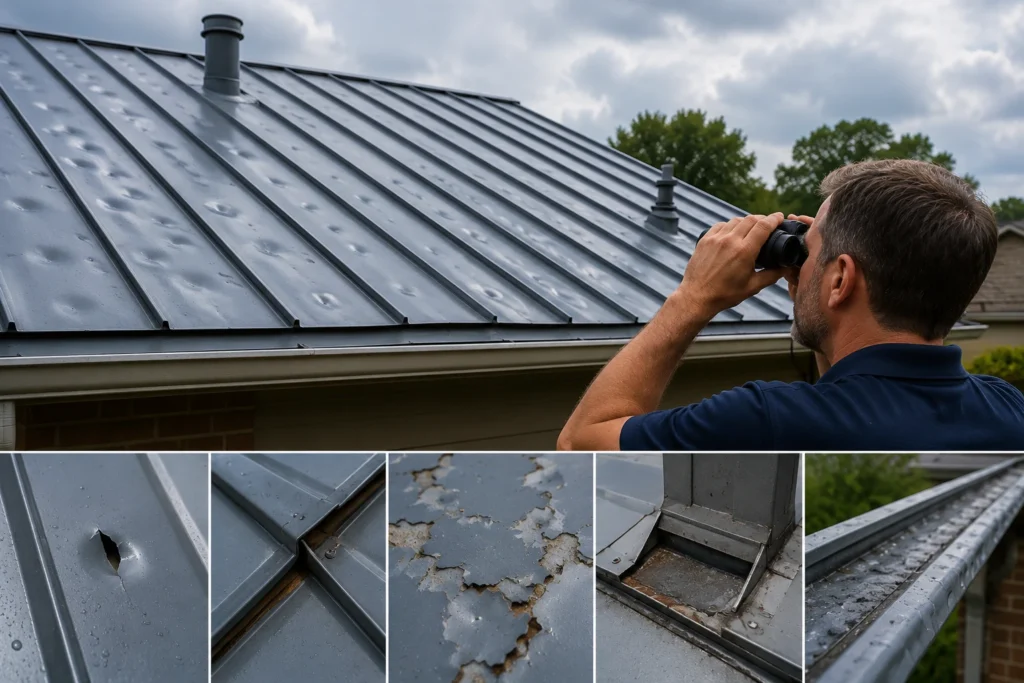
Can hail actually puncture a metal roof? Yes. Although rare, it can happen.
Factors That Increase Puncture Risk
Several conditions increase vulnerability:
- Thin metal panels
- Aging roof systems
- Existing corrosion
- Extremely large hailstones
- Repeated storm exposure
Punctures represent functional damage and usually require immediate attention.
Why Immediate Repairs Are Critical
Once a roof panel is penetrated, water intrusion becomes a serious concern. Moisture entering through even a small opening can affect:
- Insulation
- Decking
- Structural components
- Interior finishes
Prompt action reduces the risk of secondary damage.
Dented Gutters and Downspouts
Sometimes the clearest storm evidence is not on the roof itself. It is on nearby metal components.
Why Gutters Matter
Gutters often consist of softer metals. As a result, they may show hail impacts more clearly than roofing panels.
Common signs include:
- Dents
- Dings
- Impact marks
- Distorted gutter sections
Insurance professionals frequently examine gutter damage when evaluating hail claims.
What Gutters Can Reveal
Gutters can help establish:
- Storm intensity
- Hail size
- Impact direction
- Storm consistency
They often become important supporting evidence during claim investigations.
Damage to Roof Vents and Flashing
Roof accessories frequently reveal hail damage before roof panels do. Why? Because many accessories use softer metals.
Components That Commonly Show Impact Damage
Inspect:
- Roof vents
- Exhaust caps
- Turbine vents
- Chimney caps
- Valley flashing
- Pipe boots
- Drip edge materials
These components often display visible dents after storms.
Why Soft Metal Damage Is Important
Soft metal damage does not automatically prove every roof panel was damaged. However, it helps establish storm severity. That evidence can support a broader roof inspection and claim evaluation.
Damage Around Skylights and Roof Penetrations
Roof penetrations create natural weak points. When hail strikes these areas, problems can develop quickly.
Areas to Examine Closely
Pay attention to:
- Skylight frames
- Sealants
- Flashing systems
- Curbs
- Mounted equipment
Damage around penetrations often leads to moisture issues before damage becomes visible elsewhere.
Hidden Hail Damage Property Owners Often Miss
Some of the most serious hail damage is invisible from the ground. In certain cases, even trained inspectors require close examination to identify problems.
Interestingly, this hidden damage concept is somewhat similar to the scientific principle of hysteresis, where the effects of a force may continue influencing a system long after the initial event occurs. Likewise, a hailstorm may appear to have ended with little consequence while hidden roof damage continues affecting the system over time.
Common hidden issues include:
- Microfractures
- Coating failures
- Distorted panel connections
- Hidden corrosion initiation
- Moisture intrusion pathways
These conditions may not reveal themselves immediately. That delay often complicates insurance claims and repair decisions.
Cosmetic vs. Functional Hail Damage
One of the most debated topics in metal roof insurance claims involves the difference between cosmetic and functional damage. The distinction matters. A lot. Insurance carriers, contractors, engineers, and property owners may all view the same roof differently.
What Is Cosmetic Damage?
Cosmetic damage generally refers to impacts that affect appearance without immediately affecting performance.
Examples include:
- Small dents
- Minor dings
- Surface imperfections
- Visible impact marks
The roof may still shed water effectively. No leaks may be present. At first glance, the damage may seem insignificant. However, appearance alone should not determine severity. A heavily dented roof can reduce curb appeal, affect resale value, and create concerns for future buyers or tenants.
What Is Functional Damage?
Functional damage affects the roof’s ability to perform its intended purpose.
Examples include:
- Punctures
- Seam separation
- Coating failure
- Compromised flashing
- Distorted panels
- Water intrusion points
Functional damage often qualifies for broader insurance consideration because it directly impacts the roof’s ability to protect the structure.
Why the Distinction Creates Claim Disputes
Insurance policies vary. Some policies contain cosmetic damage exclusions. Others do not. This is why thorough documentation is essential. The goal is not simply proving hail occurred. The goal is proving how the hail affected the roofing system. That difference can significantly impact claim outcomes.
How to Inspect a Metal Roof After a Hailstorm
Property owners do not need to become roofing experts overnight. However, they should know how to identify potential warning signs.
Start With a Ground-Level Inspection
Safety comes first. Avoid climbing onto a roof unless properly trained and equipped. Instead, begin from the ground.
Look for:
- Visible dents
- Damaged gutters
- Dented downspouts
- Bent flashing
- Damaged vents
- Fallen debris
Use binoculars if necessary.
Many signs of hail damage on metal roofs can be spotted without leaving the ground.
Take More Photos Than You Think You Need
Documentation becomes incredibly valuable later.
Photograph:
- Entire roof elevations
- Close-up impact areas
- Damaged gutters
- Vents
- Flashing
- Skylights
- HVAC components
Capture wide-angle shots and detailed images. The more evidence available, the easier it becomes to demonstrate the scope of damage.
Focus on Storm-Facing Roof Slopes
Not every roof section experiences identical damage. Storm direction matters. Areas facing the approaching storm often receive the greatest impacts.
Pay special attention to:
- South-facing slopes
- West-facing slopes
- Exposed roof elevations
The specific pattern depends on storm movement and wind direction.
Common Mistakes Property Owners Make After Hailstorms
Even experienced property owners occasionally make mistakes after major storms. Unfortunately, those mistakes can complicate insurance claims.
Assuming Metal Roofs Cannot Be Damaged
This misconception is surprisingly common. Metal roofs are durable. They are not immune. Every year, hailstorms damage metal roofing systems across Texas. Assuming everything is fine without inspection can be costly.
Waiting Too Long to Schedule an Inspection
Time works against evidence. Fresh impacts are easier to document. Weathering, dirt accumulation, and subsequent storms can make damage harder to identify later. Prompt inspections are almost always preferable.
Throwing Away Evidence
If detached roofing materials or damaged components are found, retain them whenever practical. Physical evidence can help support claim documentation.
Making Permanent Repairs Too Soon
Emergency mitigation is appropriate. Permanent repairs should generally wait until documentation is complete and inspections have occurred. Premature repairs may eliminate critical evidence.
Relying Solely on a Quick Visual Assessment
Some damage cannot be identified through a brief walk-around. Professional evaluations often uncover issues hidden beneath the surface.
Why Metal Roof Hail Claims Are Frequently Disputed
Insurance disputes involving metal roofs are not unusual. Several recurring issues contribute to disagreements.
Cosmetic Damage Arguments
Many disputes center on whether dents affect function or appearance. The larger and more widespread the damage, the more complex these discussions often become.
Undervalued Repair Scopes
Some estimates focus only on visibly damaged panels. Additional affected components may be overlooked.
Examples include:
- Flashing
- Fasteners
- Sealants
- Gutters
- Roof accessories
A complete repair scope should evaluate the entire roofing system.
Matching Challenges
Older roofs create another challenge. Replacement panels may not perfectly match existing materials.
Differences in:
- Color
- Finish
- Profile
- Weathering
can affect repair decisions.
Repair vs. Replacement Debates
This issue frequently becomes the central dispute.
Questions often include:
- Can the roof be repaired effectively?
- Will repairs restore original functionality?
- Are matching materials available?
- Will repairs create future performance concerns?
Each situation requires careful analysis.
Why Property Owners in Forney Face Unique Hail Risks
North Texas experiences some of the most active severe weather patterns in the country. Property owners in Forney know this firsthand. Spring and early summer frequently bring powerful thunderstorms capable of producing large hail.
Common Weather Threats in Forney
Property owners in Forney regularly face:
- Hailstorms
- Windstorms
- Heavy rain events
- Lightning
- Severe thunderstorms
These events often create damage that extends beyond what is immediately visible. A roof can appear intact while sustaining impacts that compromise long-term performance.
Why Prompt Action Matters in Forney
Storm activity often occurs repeatedly throughout the year. Waiting months to investigate possible damage can make it harder to distinguish between separate weather events. Timely inspections help establish a clear connection between storm activity and roof damage. For many property owners in Forney, that documentation becomes critical during the claim process.
How a Public Adjuster Can Help After Metal Roof Hail Damage
Not every claim requires outside assistance. Many claims proceed smoothly. Others become more complicated. When disputes arise regarding scope, valuation, or causation, some property owners seek assistance from a public adjuster.
Independent Damage Assessment
Public adjusters perform their own evaluations of the loss. Their objective is to identify all covered damage rather than relying solely on carrier findings.
Documentation Support
Strong documentation often includes:
- Photographs
- Inspection reports
- Repair estimates
- Weather data
- Supporting evidence
Organized documentation can strengthen claim presentations.
Reviewing Insurance Estimates
Some estimates may omit certain damaged components. A detailed review helps determine whether the proposed scope accurately reflects the loss.
Understanding Public Adjuster Compensation
Many property owners eventually research The Truth Behind Public Adjuster Fees when deciding whether professional representation makes sense. Understanding fee structures, responsibilities, and potential benefits can help property owners make informed decisions based on the complexity of their claim.
When Metal Roof Replacement May Be Necessary
Not every hail-damaged roof requires replacement. However, replacement may become the most practical solution under certain circumstances.
Extensive Functional Damage
Widespread functional damage may affect:
- Waterproofing
- Structural performance
- Long-term durability
In those cases, repairs alone may not fully restore the system.
Significant Coating Failure
When impacts compromise protective coatings across large roof areas, corrosion risks increase. Repairing isolated sections may not adequately address the broader problem.
Multiple System Components Damaged
Sometimes the issue extends beyond roof panels.
Damage may involve:
- Gutters
- Flashing
- Fasteners
- Vents
- Sealants
The cumulative impact can influence replacement decisions.
Repair Costs Approach Replacement Costs
At a certain point, extensive repairs may become economically impractical. A full replacement may provide better long-term value and performance.
A Quick Reference Checklist for Property Owners
After a hailstorm, inspect for the following:
| Component | What to Look For |
| Metal Panels | Dents, dings, punctures |
| Paint Finish | Chipping, cracking, exposed metal |
| Seams | Separation, distortion |
| Fasteners | Missing screws, damaged washers |
| Gutters | Dents and impact marks |
| Flashing | Bent or dented sections |
| Vents | Visible impacts |
| Skylights | Frame and flashing damage |
| Downspouts | Fresh dents and deformation |
| Roof Penetrations | Damaged sealants and flashing |
This checklist can serve as a useful starting point, but it should not replace a comprehensive inspection when significant hail is suspected.
Conclusion
Recognizing the signs of hail damage on metal roofs is one of the most important steps property owners can take after a severe storm.
While obvious dents often attract immediate attention, the most costly damage is sometimes hidden beneath the surface. Coating failures, seam distortion, fastener issues, and moisture intrusion pathways may develop long before visible leaks appear.
For property owners in Forney, regular hail activity makes proactive inspections especially important. The sooner potential damage is identified, documented, and evaluated, the easier it becomes to make informed repair decisions and navigate the insurance process effectively. A metal roof is a major investment. Protecting that investment starts with understanding what hail damage looks like, knowing where to look, and taking action before small problems become expensive ones.
FAQs
The most common signs include dents, dings, chipped coatings, damaged seams, and impacts on gutters or roof vents.
Yes. A metal roof can sustain dents and functional damage that may not cause leaks until months or even years later.
Some dents may be considered cosmetic, but others can affect roof performance, waterproofing, or long-term durability.
It’s best to inspect the roof as soon as conditions are safe to document damage before additional weather events occur.
Yes. Although uncommon, large hailstones can puncture thinner or older metal roofing systems.
Gutters often show visible dents that help demonstrate storm severity and support hail damage investigations.
Temporary mitigation may be appropriate, but permanent repairs should generally wait until inspections and documentation are complete.
Yes. Disputes may arise regarding coverage, damage scope, causation, or whether damage is cosmetic or functional.
Seams, fasteners, flashing, vents, skylights, and protective coatings are often among the most vulnerable components.
Property owners may consider a public adjuster when claims involve significant damage, disputed findings, or complex settlement negotiations.