
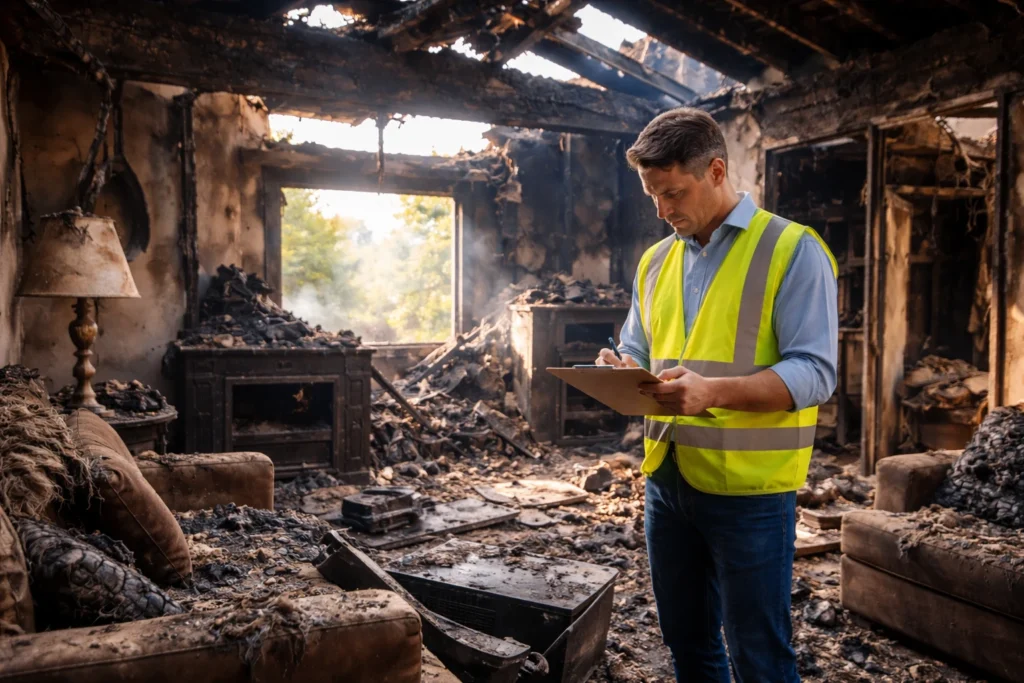
A fire can turn your world upside down in minutes. One moment everything is intact, and the next, you’re standing outside watching years of memories go up in smoke. It’s overwhelming. It’s exhausting. And it’s exactly when you need clarity the most. This is where a fire insurance adjuster steps in.
If you’ve never filed a fire claim before, the process can feel confusing and, honestly, stacked against you. Insurance policies are dense. Documentation is time-consuming. And settlement offers? They don’t always reflect the true extent of your loss. I’ve seen it happen more times than I can count. Understanding how a fire insurance adjuster works and when to bring one in can make a significant difference in your final payout and your peace of mind. Let’s break it all down, step by step, so you can make smart, confident decisions when it matters most.
What Is a Fire Insurance Adjuster?
A fire insurance adjuster is a professional who evaluates property damage, interprets your insurance policy, and determines how much compensation should be paid for a fire-related claim. But here’s the part most homeowners miss there are different types of adjusters:
- Insurance Company Adjuster
Works for the insurance company. Their goal is to settle your claim often efficiently, not necessarily generously. - Independent Adjuster
Hired by insurance companies on a contract basis. Still represents the insurer. - Public Adjuster
Works for you, the policyholder. This is where firms like Forney Public Adjuster come in.
That distinction matters. A lot.
Because when a fire hits, you don’t just need someone to process paperwork you need someone advocating for your financial recovery.
What Does a Fire Insurance Adjuster Actually Do?
Let’s get practical. A fire insurance adjuster isn’t just walking around with a clipboard. They’re building your case.
Damage Assessment
They inspect everything. Not just what’s obvious.
- Structural damage (walls, roofing, foundation)
- Smoke and soot infiltration
- Water damage from firefighting efforts
- HVAC contamination
Small details get missed without a trained eye. And those details add up fast.
Documentation and Evidence Collection
This is where claims are won or lost.
A fire insurance adjuster will:
- Create a detailed inventory of damaged items
- Assign accurate replacement values
- Capture photo and video evidence
- Organize everything into a structured claim file
No guesswork. No shortcuts.
Policy Review
Insurance policies are not light reading. They’re layered, technical, and full of conditions.
A good adjuster will:
- Identify coverage limits
- Spot exclusions
- Find hidden benefits (like additional living expenses)
This alone can significantly increase your claim value.
Claim Preparation and Filing
They prepare estimates. They compile documentation. They submit everything properly. Because one missing detail can delay your claim for weeks.
Negotiation with Insurance Companies
This is where the real value shows up.
A fire insurance adjuster:
- Handles all communication with the insurer
- Pushes back on low offers
- Justifies higher valuations with evidence
And trust me insurance companies negotiate differently when a professional is involved.
Why Fire Claims Are More Complicated Than You Think
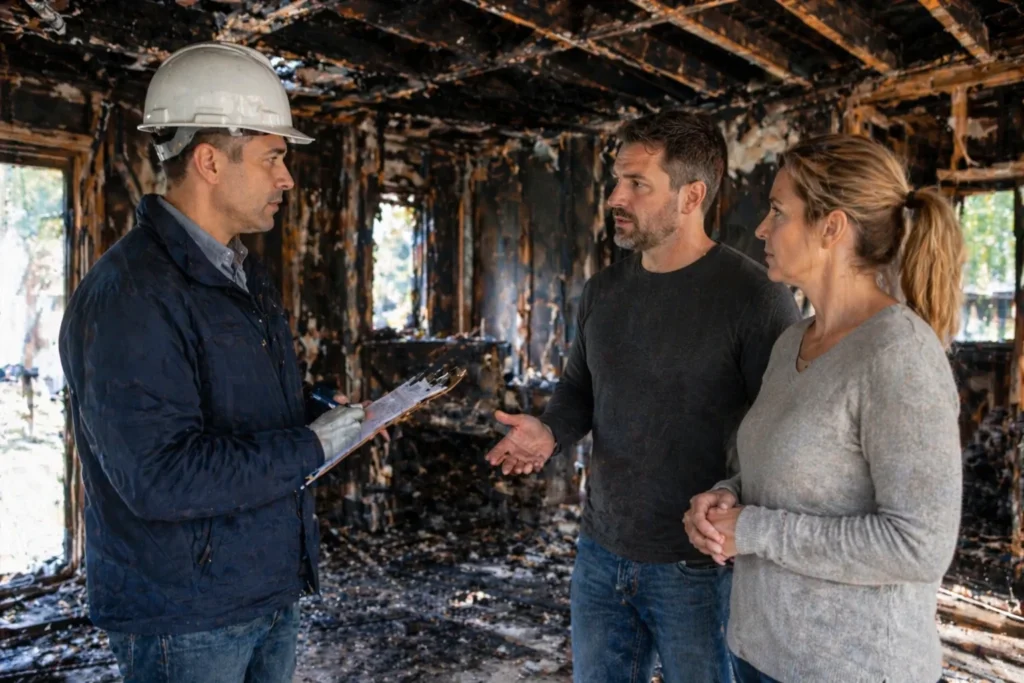
Fire damage isn’t just fire damage. It’s layered.
Here’s what most people underestimate:
| Type of Damage | Why It Matters |
| Fire damage | Structural loss, obvious destruction |
| Smoke damage | Can spread through entire home, affecting walls, fabrics, and air systems |
| Water damage | From firefighting efforts, often leads to mold risks |
| Code upgrades | Required rebuilding standards can increase costs |
| Loss of use | Temporary housing and living expenses |
Interestingly, complex systems whether in property damage evaluation or scientific frameworks like Mandelbrot set often reveal hidden layers beneath what appears simple on the surface. Fire claims work the same way. What you see initially is rarely the full picture. It’s not one claim. It’s multiple claims wrapped into one. Miss one piece, and you leave money on the table.
When Should You Hire a Fire Insurance Adjuster?
Timing matters. A lot.
Immediately After the Fire
The earlier you involve a fire insurance adjuster, the better.
Why?
- Evidence is fresh
- Documentation is more accurate
- Mistakes are avoided early
When Your Claim Is Delayed
If your insurer keeps asking for more documents or dragging timelines, that’s a red flag.
If Your Claim Is Denied or Underpaid
Lowball offers happen. Denials happen. A fire insurance adjuster can reopen and challenge those decisions.
For Large or Complex Losses
Total losses. Major structural fires. Multi-room damage. These are not DIY claims.
Benefits of Hiring a Public Fire Insurance Adjuster
Let’s be direct. You’re not hiring help you’re hiring leverage.
Here’s what you gain:
- Higher Settlements
- Less Stress
- Faster Resolution
- Expert Advocacy
- Local Knowledge
Fire Insurance Adjuster vs Insurance Company Adjuster
| Factor | Public Adjuster (You) | Insurance Adjuster |
| Who they work for | You | Insurance company |
| Goal | Maximize payout | Minimize payout |
| Incentive | Percentage of claim | Salary/contract |
| Level of advocacy | High | Limited |
The Fire Insurance Claims Process Explained
Step 1 – Emergency Response and Mitigation
Secure the property. Prevent further damage.
Step 2 – Initial Claim Filing
Notify your insurer. Start the claim officially.
Step 3 – Inspection and Evaluation
An adjuster visits your property. This is critical.
Step 4 – Documentation Submission
Inventory lists. Estimates. Supporting evidence.
Step 5 – Negotiation
Offers go back and forth.
Step 6 – Settlement and Payout
Final agreement. Funds released.
Common Mistakes Homeowners Make After a Fire
- Accepting the first settlement offer
- Not documenting every damaged item
- Throwing away evidence too early
- Misunderstanding policy coverage
- Waiting too long to get professional help
How to Choose the Right Fire Insurance Adjuster in Forney
- Verify licensing
- Look for fire claim experience
- Understand the fee structure
- Choose local expertise
- Check reviews
How Much Does a Fire Insurance Adjuster Cost?

Most work on contingency:
- Typically 10% of settlement
- No upfront payment
- Higher settlements often offset the fee
Real-Life Scenario: How a Fire Insurance Adjuster Increases a Settlement
Initial Offer: $120,000
After Adjuster Review:
- More damage identified
- Inventory corrected
- Code upgrades added
Final Settlement: $185,000
That difference speaks for itself.
Final Thoughts: Is Hiring a Fire Insurance Adjuster Worth It?
After a fire, you’re not just rebuilding a house you’re rebuilding your life. A fire insurance adjuster brings clarity. Strategy. Advocacy. They make sure nothing gets overlooked. They push for what you’re truly owed. And they give you breathing room during one of the most stressful moments you’ll face as a homeowner. If you’re in Forney, getting the right help early isn’t just smart it’s essential.
FAQs
A fire insurance adjuster evaluates fire damage, reviews your policy, and determines how much compensation you should receive from your insurance claim.
Yes, especially for large or complex claims, as a fire insurance adjuster can help maximize your settlement and handle negotiations with the insurer.
A public adjuster works for you, while an insurance adjuster works for the insurance company and represents their interests.
Most fire insurance adjusters charge a contingency fee, typically between 10% of your final settlement, with no upfront payment required.
The best time is immediately after the fire, before filing or finalizing your claim, to ensure proper documentation and avoid costly mistakes.
Yes, a fire insurance adjuster can often review and challenge denied or underpaid claims by providing additional evidence and documentation.
It can take anywhere from a few weeks to several months, depending on the complexity of the damage and how well the claim is documented.
Claims may include fire, smoke, soot, and water damage, as well as additional living expenses if your home becomes uninhabitable.
In many cases, yes because they identify overlooked damages, ensure accurate valuations, and negotiate more effectively with the insurer.
For minor damage, you may handle the claim yourself, but a fire insurance adjuster is highly beneficial for larger or more complex losses.